7 Reasons the Grainbloom Is the Only Grain Mill Worth Buying Before You Spend $400
Every countertop mill in this category promises fresh flour. Most either wreck your equipment, sit in a cabinet, or cost enough that failure isn't an option. Here's the one that sidesteps all three problems.
If you've been comparison-shopping grain mills for more than two hours, you already know the situation: the KitchenAid attachment is cheap but the reviews are full of burned-out motors, and the premium countertop mills are excellent but $300–$900 is a serious bet on a new habit. The thing that keeps people stuck isn't lack of information. It's that neither option feels safe. The Grainbloom exists in that gap — and the comparison is worth doing carefully.
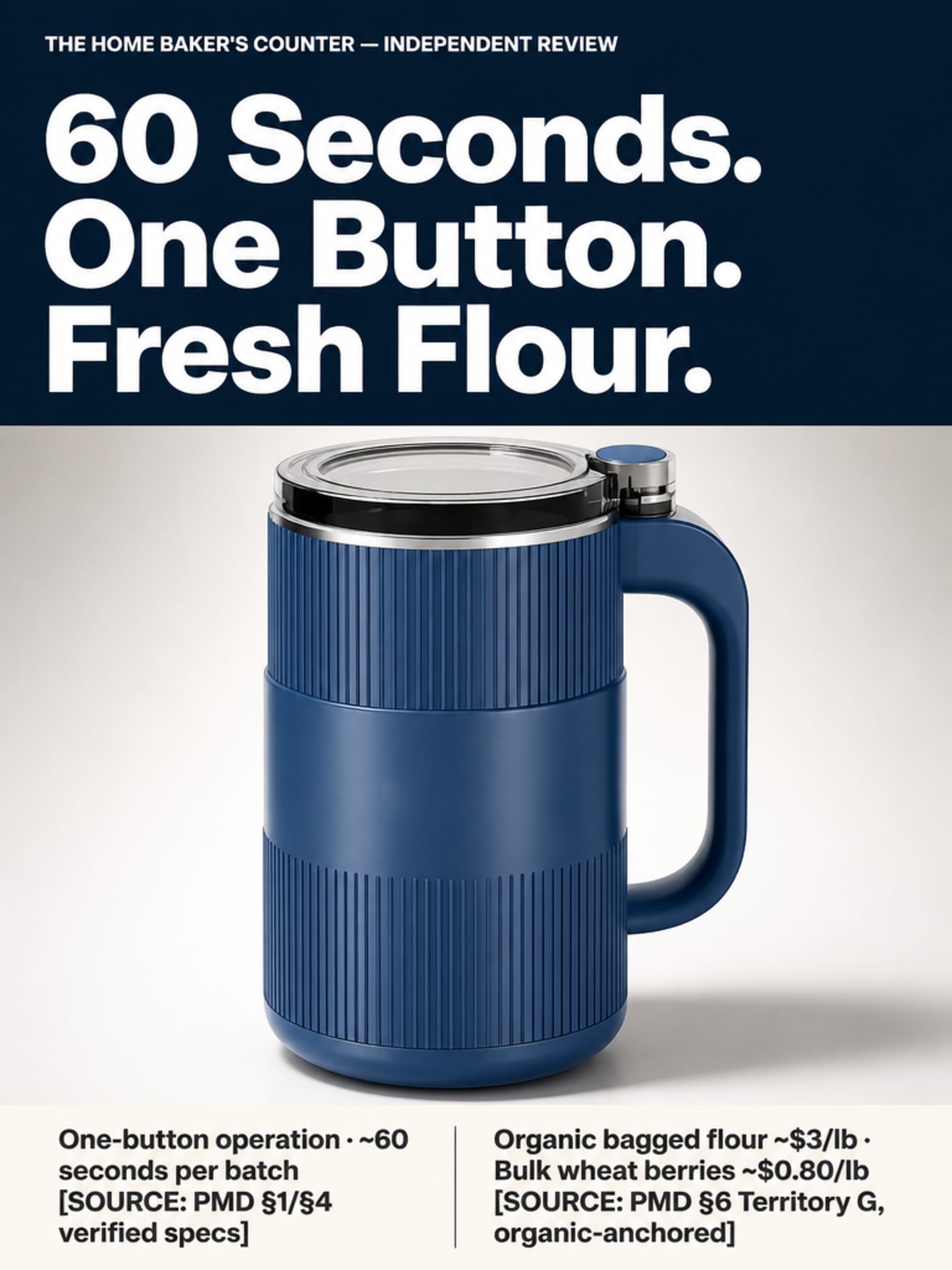
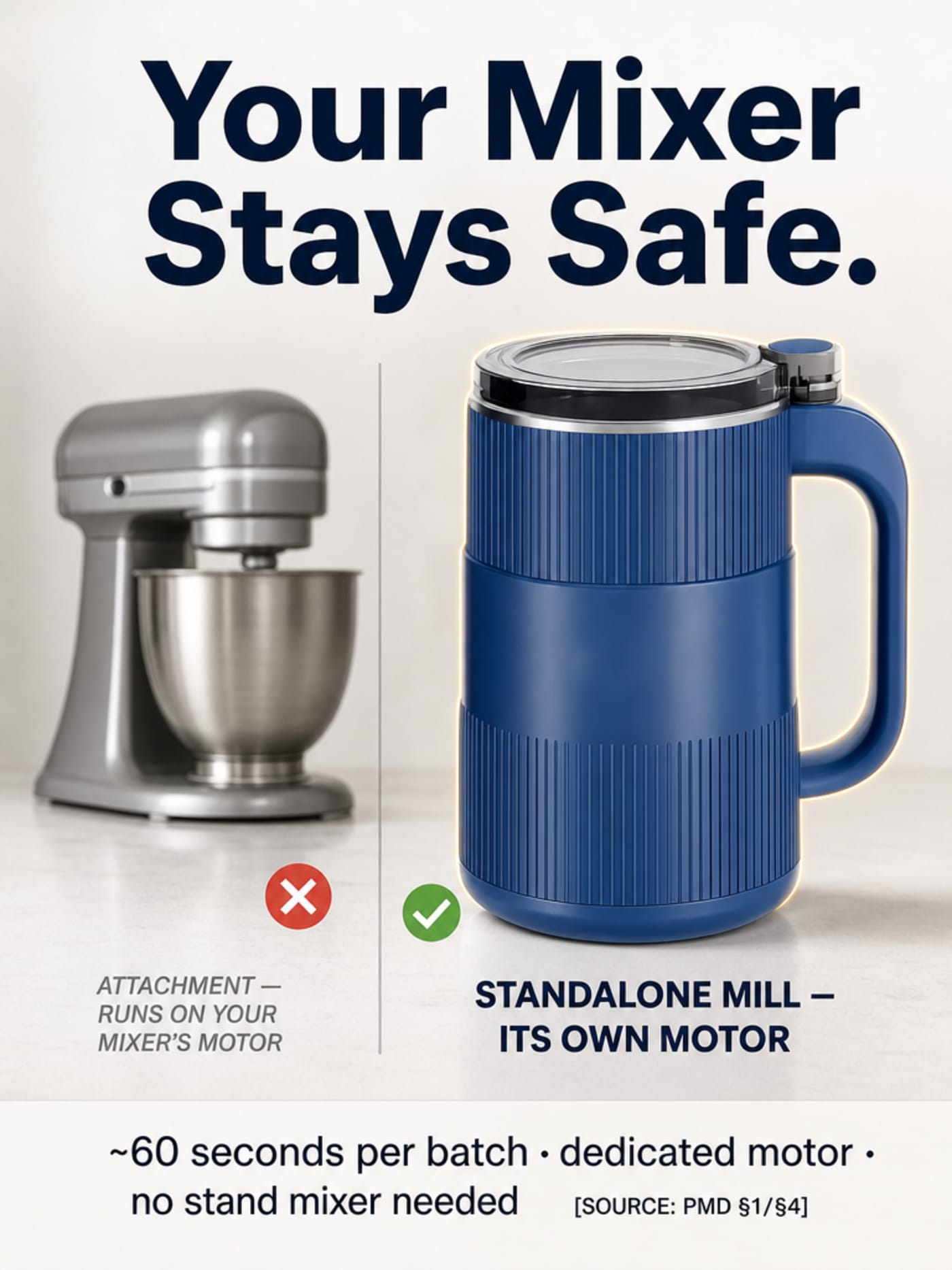
The Grainbloom doesn't touch your stand mixer. It has its own motor, its own housing, its own dedicated job. You pour grain in the top, press one button, and in about 60 seconds you have a 300g batch of fresh-milled flour. That's the whole process. The stand mixer stays on its pad doing stand-mixer things.
This matters more than it sounds. The reader at this point isn't just comparing flour quality — they're comparing risk. A tool that doesn't endanger equipment you already own is a categorically different kind of purchase than one that does.
1. Measure your wheat berries.
2. Pour them into the hopper.
3. Press the button.
4. Wait approximately 60 seconds.
5. Your 300g batch of fresh flour is ready.
There is no warm-up. No progressive speed adjustment. No monitoring the motor temperature. No cleaning an auger mechanism after. The mill processes a standard baking batch — enough for a loaf — in about a minute, then stops.
The one thing worth knowing: the batch size is 300g per run. If you're baking for a large family and need several pounds at once, you'll run multiple batches. That's a real constraint to name honestly. For single-loaf or small-batch bakers — which is most of the people reading this — 300g is a full session.
This is a tool for someone who's already convinced. Not someone who needs persuading that fresh-milled flour is better than the bag — that conversion already happened. Someone who's stalled at the decision because neither option they've been researching feels like the right first step.
The Grainbloom is a first step. That's its job, and it does it well.
🌾 The next page shows exactly what's included — the mill, the guide, and what the 30-day window actually covers.
See What's Actually Inside →Fresh-milled flour behaves differently than store flour. The hydration ratios are different. The timing is different. The first loaf baked by someone who just switched is, with high probability, going to be denser than expected. This is documented exhaustively across the fresh-milling community: "Dense bread is the #1 complaint."
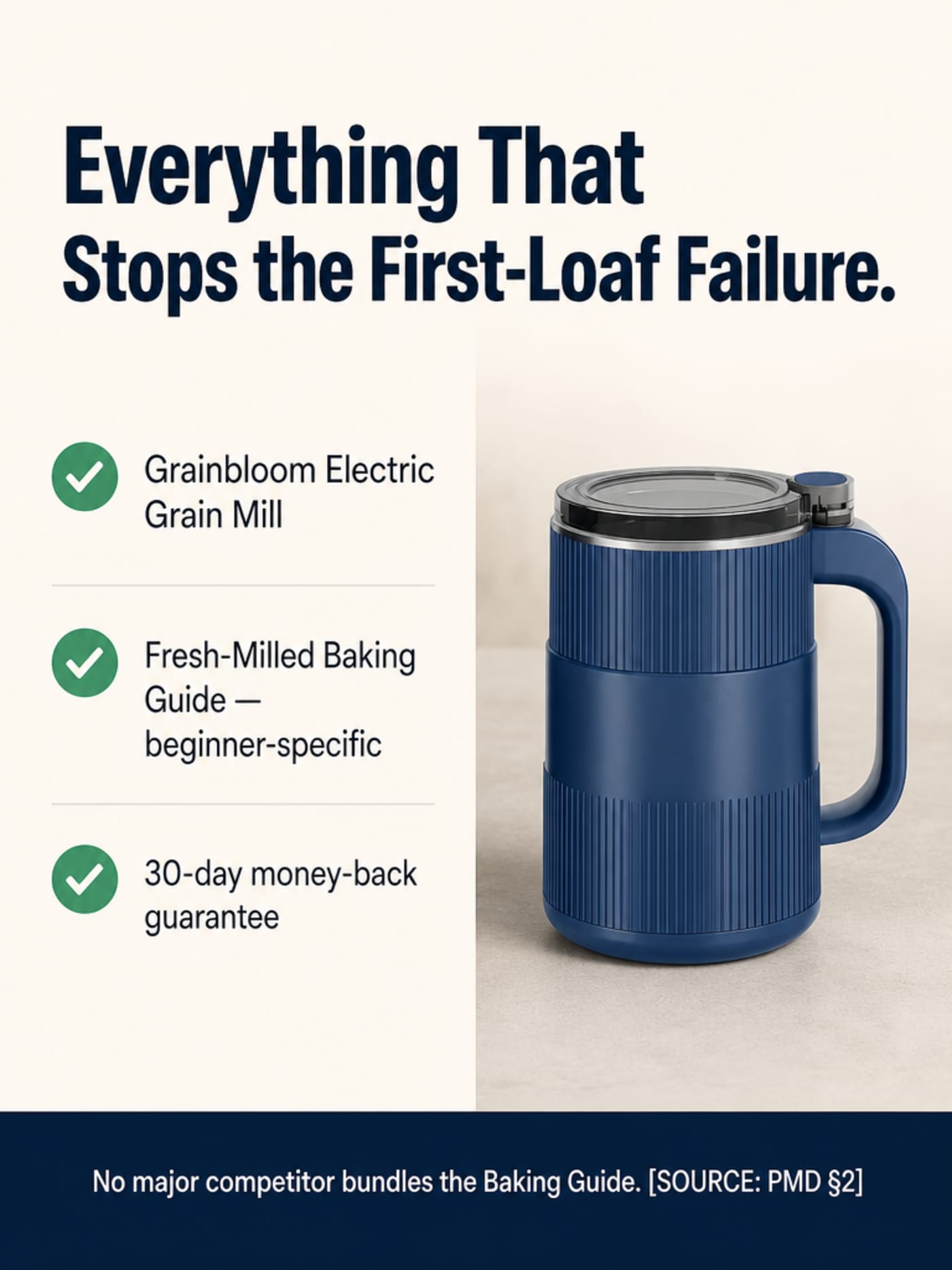
The Guide exists because of that first loaf. It covers the adjustments a beginning fresh-miller needs before the first bake, not after the first failure. No premium mill in this category bundles this. The Grainbloom does.
What's in the box:
✅ Grainbloom Electric Grain Mill
✅ Fresh-Milled Baking Guide (beginner-focused, fresh-flour specific)
✅ 30-day money-back guarantee
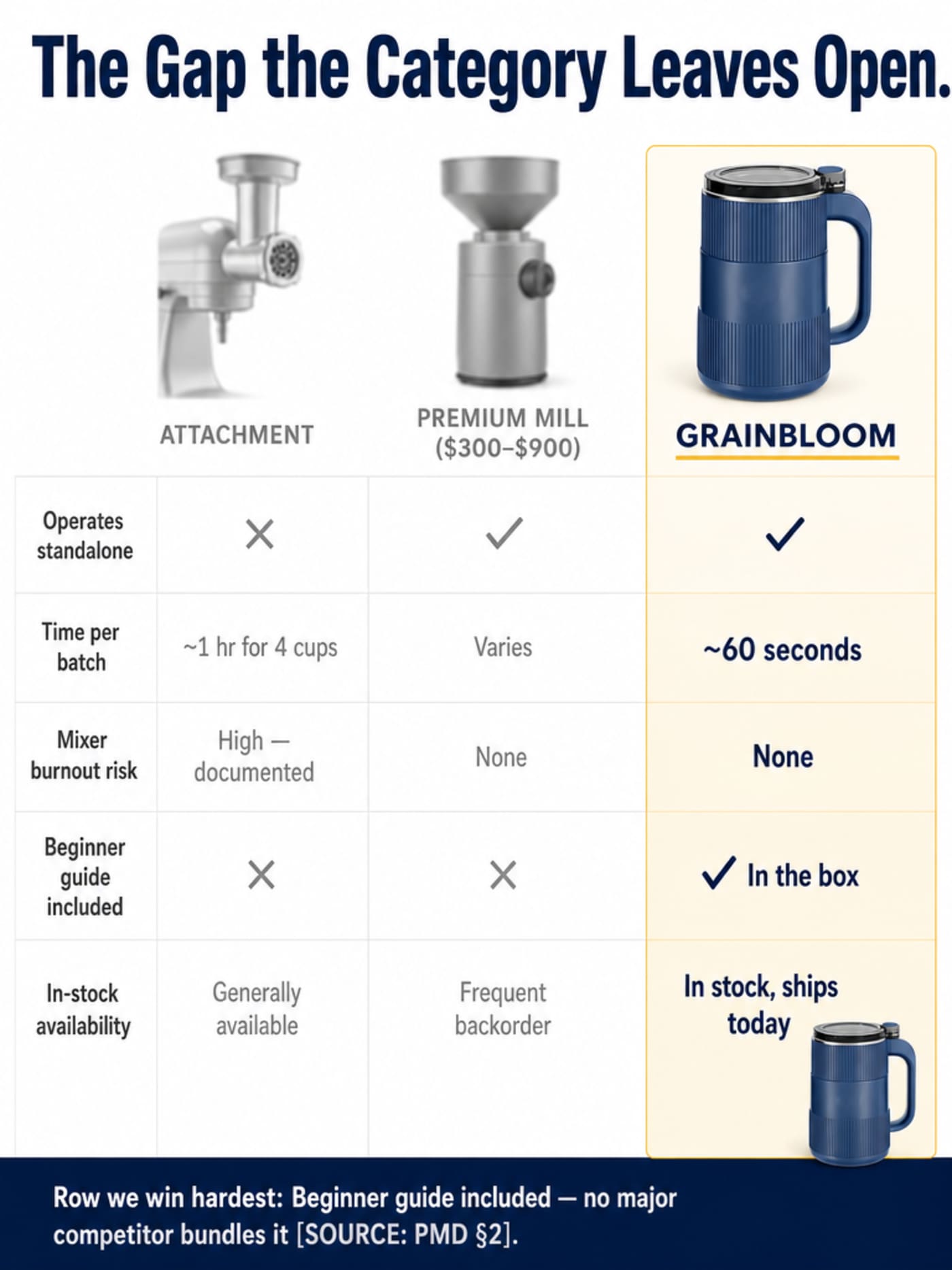
KitchenAid Attachment: runs on your mixer's motor, ~1 hour for 4 cups, documented mixer burnout risk, no beginner guide, generally available — but the risk to your equipment is real and documented.
Premium Countertop Mills ($300–$900): standalone, capable machines — but frequently on backorder and a serious financial commitment on a habit that hasn't been confirmed yet.
Grainbloom: standalone dedicated motor, ~60 seconds per 300g batch, no mixer burnout risk, Fresh-Milled Baking Guide in the box, in stock and ships today.
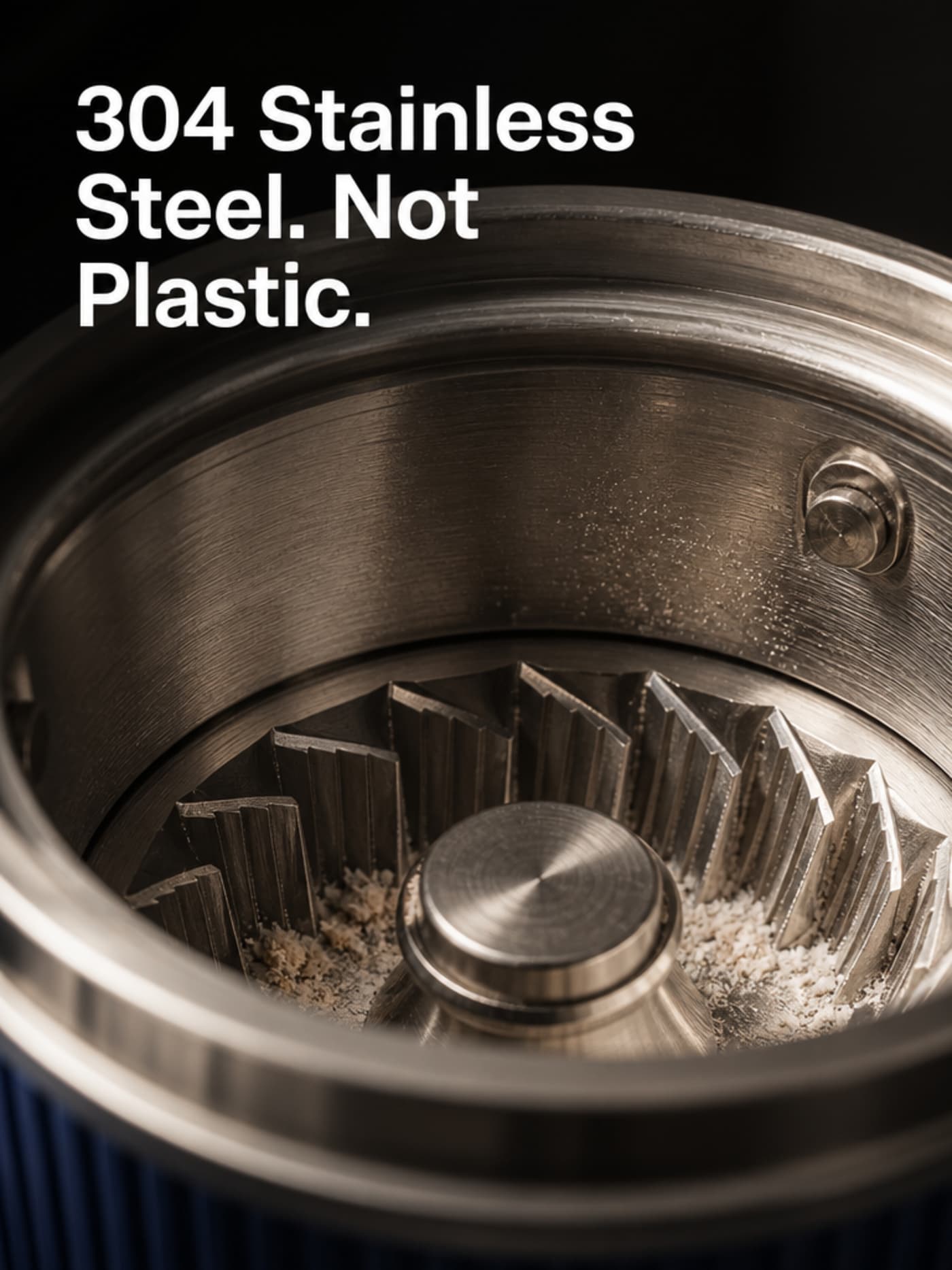
The honest caveat on durability: this is a rebranded generic swing mill and long-cycle durability beyond the 30-day guarantee period hasn't been independently measured. The steel grinding chamber is a real, documentable material spec. It is not a claim that this mill runs for a decade without service. The 30-day money-back window is the durability claim that actually exists — 30 days of real baking to verify whether this is the right tool before the decision is final.
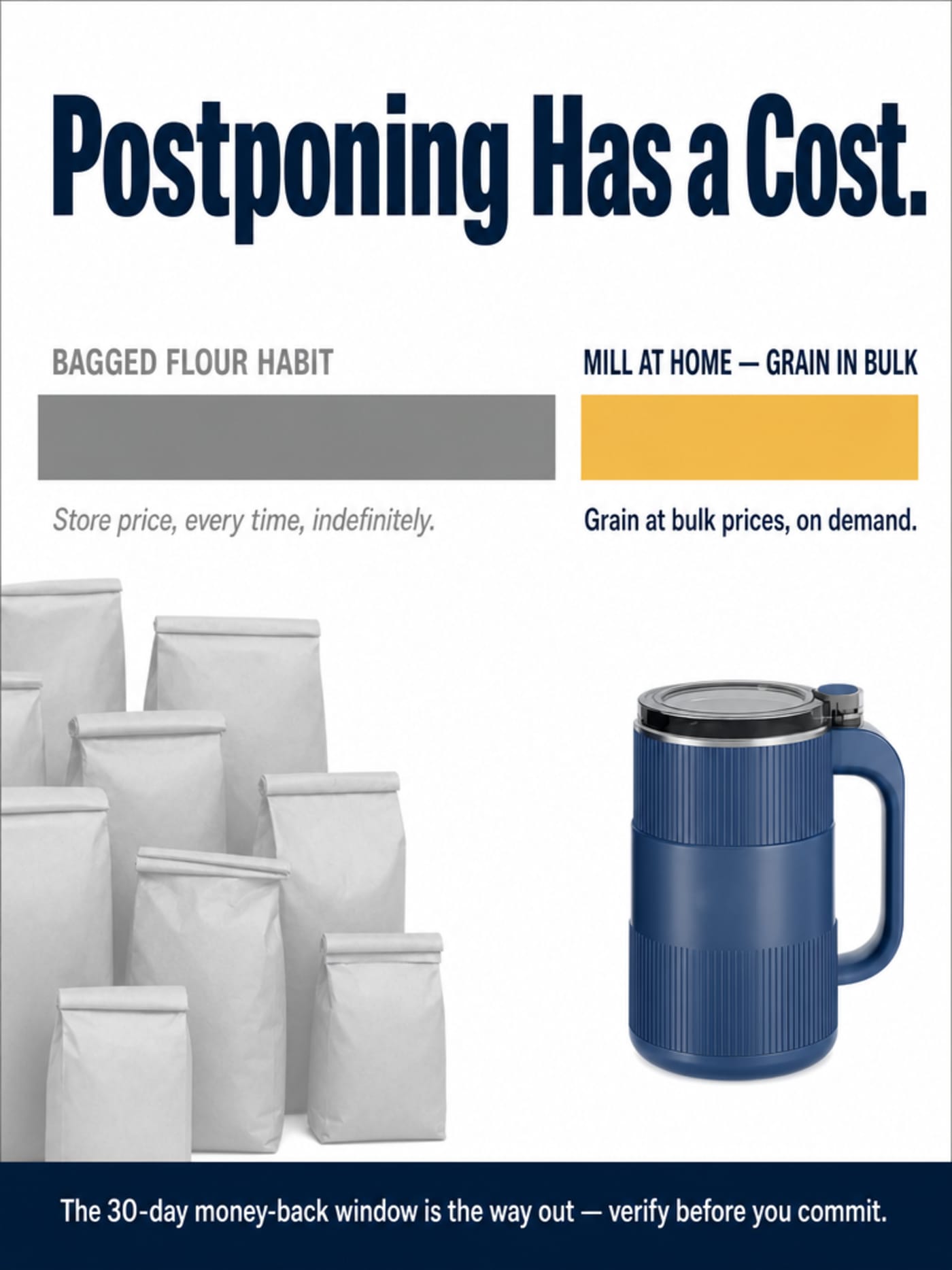
Organic bagged flour runs around $3 per pound. Bulk whole wheat berries run around $0.80 per pound. That gap exists every time someone bakes with a bag instead of grain. Over a baking habit, it adds up.
Here's the honest version of the alternative decision tree. The KitchenAid attachment is cheaper upfront but the reviews are unambiguous about the motor load. The premium mills are genuinely excellent — but a $300–$900 first grain mill is a significant bet on a habit that hasn't been confirmed yet. The documented community pattern is: buy a premium mill, fail at the first loaves, feel bad about it, and the mill goes in a cabinet.
The damaging admission: the Grainbloom is a rebranded generic 300g swing mill. The hardware isn't unique. The moat is the price point that makes this a low-stakes experiment rather than a high-stakes commitment, plus the Baking Guide that's in the box precisely because the first loaves are the ones most people fail on, and plus the 30-day window to find out whether this habit is yours before the money is gone.
Grainbloom vs. the category — the full decision matrix
🌾 The next page shows the complete offer — the mill, the guide, and the 30-day guarantee — so you can check everything before you decide.
Try It Risk-Free →The purpose of a guarantee at this stage of a decision is to turn a commitment into a trial. The Grainbloom's guarantee does exactly that. You're not betting — you're verifying.
Is Grainbloom Electric Grain Mill Right For You?
- You're already convinced fresh-milled flour is better and you're stalled at the price or risk of a premium mill
- You've looked at the KitchenAid attachment and the motor-burnout reviews make you nervous
- You bake in single-loaf or small batches and want 300g ready in a minute
- You want the Baking Guide in the box because you know the first loaves are where people quit
- You need to mill several pounds in a single session without stopping — this is a 300g-per-batch mill and consecutive batches require pauses
- You need pastry-fine flour for delicate applications — fineness specs haven't been independently measured against premium stone-burr mills
- You're looking for a long-cycle durability guarantee beyond the 30-day window — extended lifespan data hasn't been produced
The Grainbloom solves the grain-mill category's real problem, which is not flour quality — every mill in this category produces better flour than the bag — but the trap between equipment that damages what you own and a premium commitment that's too expensive to fail with. One button, 60 seconds, a Baking Guide that no premium competitor ships, and a 30-day window that converts the decision from a bet into a trial. The hardware isn't unique. The positioning is. If you've been circling this decision for two weeks, the honest next move is to find out on reversible terms — not to keep researching.

The next page shows the complete offer: the mill itself, the Fresh-Milled Baking Guide that's in the box, and the full terms of the 30-day money-back guarantee — what it covers, how to use it, and what the actual baking window looks like. Everything the decision depends on is on that page. You can check the complete offer before you commit to anything.