7 Reasons the Grainbloom Is the Only Grain Mill That Doesn't Ask You to Bet $400 Before Your First Loaf
Every grain mill you've been comparing makes you commit before you know if fresh milling is even for you. One doesn't.
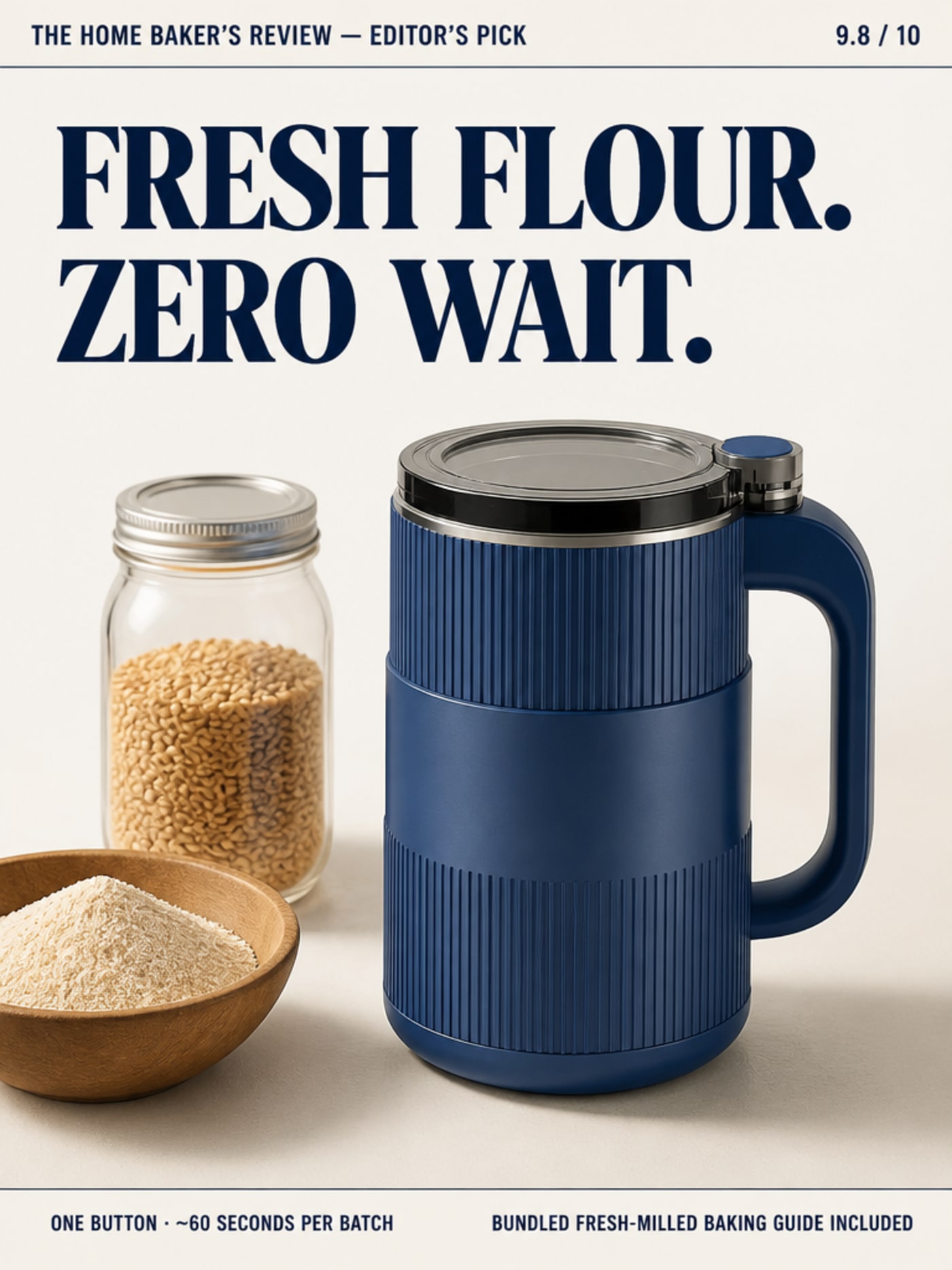
You already know what fresh-milled flour is supposed to do. You've read the posts. You've watched the videos. You've spent a week with three browser tabs open — NutriMill, Mockmill, the KitchenAid attachment — and you still haven't bought anything. The problem is not information. The problem is that every option in this category asks you to make a large financial commitment before you've baked a single loaf from fresh-milled grain. That's backwards. And it's exactly the gap the Grainbloom was built for.
Every premium grain mill in this category — the ones reviewers call "best overall" — runs between $300 and $900. They are genuinely good machines. But they ask you to make a several-hundred-dollar decision based on the conviction that you will want to mill flour regularly, that your baking will adapt to fresh-milled grain, and that the learning curve won't beat you.
That conviction is unproven until you've actually done it.
The Fresh Loaf forum — one of the largest English-language bread-baking communities — has a thread that captures this precisely. One member wrote: "I am racking my brains out trying to choose one — they are $1,000!" Another laid out the smarter logic: "Play with what I can easily buy and see if I even like it — AND THEN I'd go out and buy a Nutrimill."
That second person had it right. The Grainbloom is the "play with what I can easily buy" mill. One button. About 60 seconds per 300-gram batch. A Fresh-Milled Baking Guide in the box that no major competitor includes. And a 30-day money-back guarantee.
If you love it — and there's a real chance you will — the $400 upgrade decision becomes a lot easier and a lot more confident. If it turns out fresh milling isn't your thing, you found out for a fraction of the cost of finding out the expensive way.
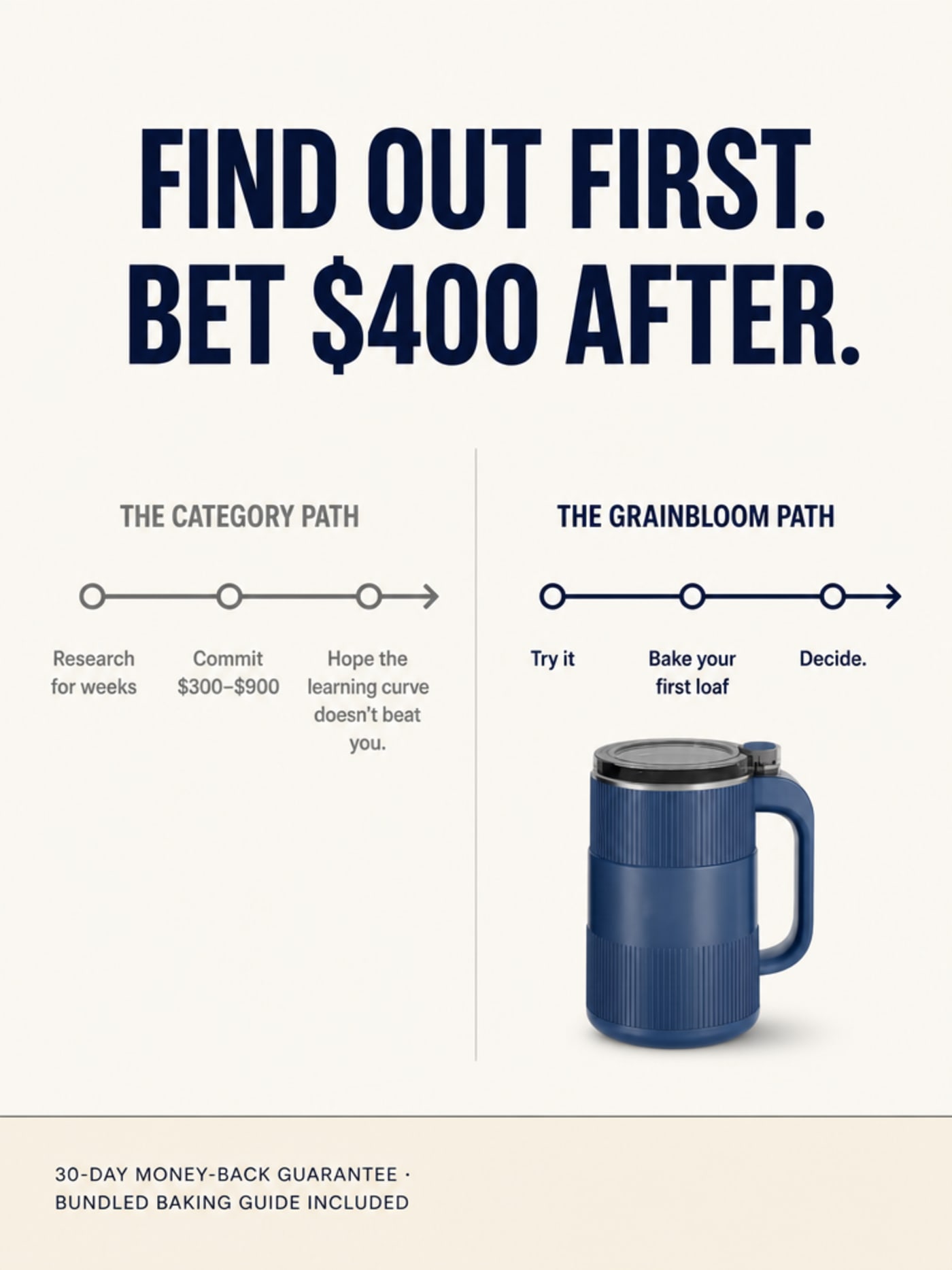
A lot of bakers land on the KitchenAid grain-mill attachment as the obvious first move. You already own the mixer, so the attachment looks like the low-commitment entry point.
It isn't. The attachment runs about $179 on its own. And that's before you account for what it does to your mixer.
Real buyers who tried it wrote:
"The motor gets hot. I had to keep stopping… about an hour to grind 4 cups."
"Broke my kitchen aid head tilt mixer after one use."
An hour per batch. A potentially wrecked $400 mixer. Coarse flour the attachment's own reviewers describe as inconsistent. This is the "cheap option."
A standalone mill that risks nothing you already own and grinds in 60 seconds is a different category of decision entirely — even before you get to the price.
Here is exactly what happens when you use the Grainbloom.
You measure your wheat berries — about 300 grams fills a batch. You pour them into the hopper. You press one button. In roughly 60 seconds, you have a bowl of flour milled from whole grain — nothing stripped out, nothing added back, not sitting in a bag on a warehouse shelf for months. The grain went from berry to flour this morning, in your kitchen, while you preheated the oven.
That last part matters more than it sounds. Commercial flour — including the bags labeled "whole wheat" — is milled at industrial facilities, then packaged and shipped, then warehoused, then shelved. By the time it reaches your counter, the grain has been processed for weeks or months. The bran, germ, and endosperm — the three parts of the whole grain — have been partially or fully separated during that process. In refined white flour, more than 50% of B vitamins and around 90% of vitamin E are stripped out during commercial refining. Even "whole wheat" flour, once milled and packaged, begins oxidizing immediately.
Fresh-milled means you start with the whole grain, nothing removed. That's not a marketing claim — it's a description of what a grain mill does.
The Grainbloom doesn't require you to understand any of this. You press the button. You get flour. The rest follows.

Still comparing? The answer to that is on the next page — and it comes with a 30-day return window.
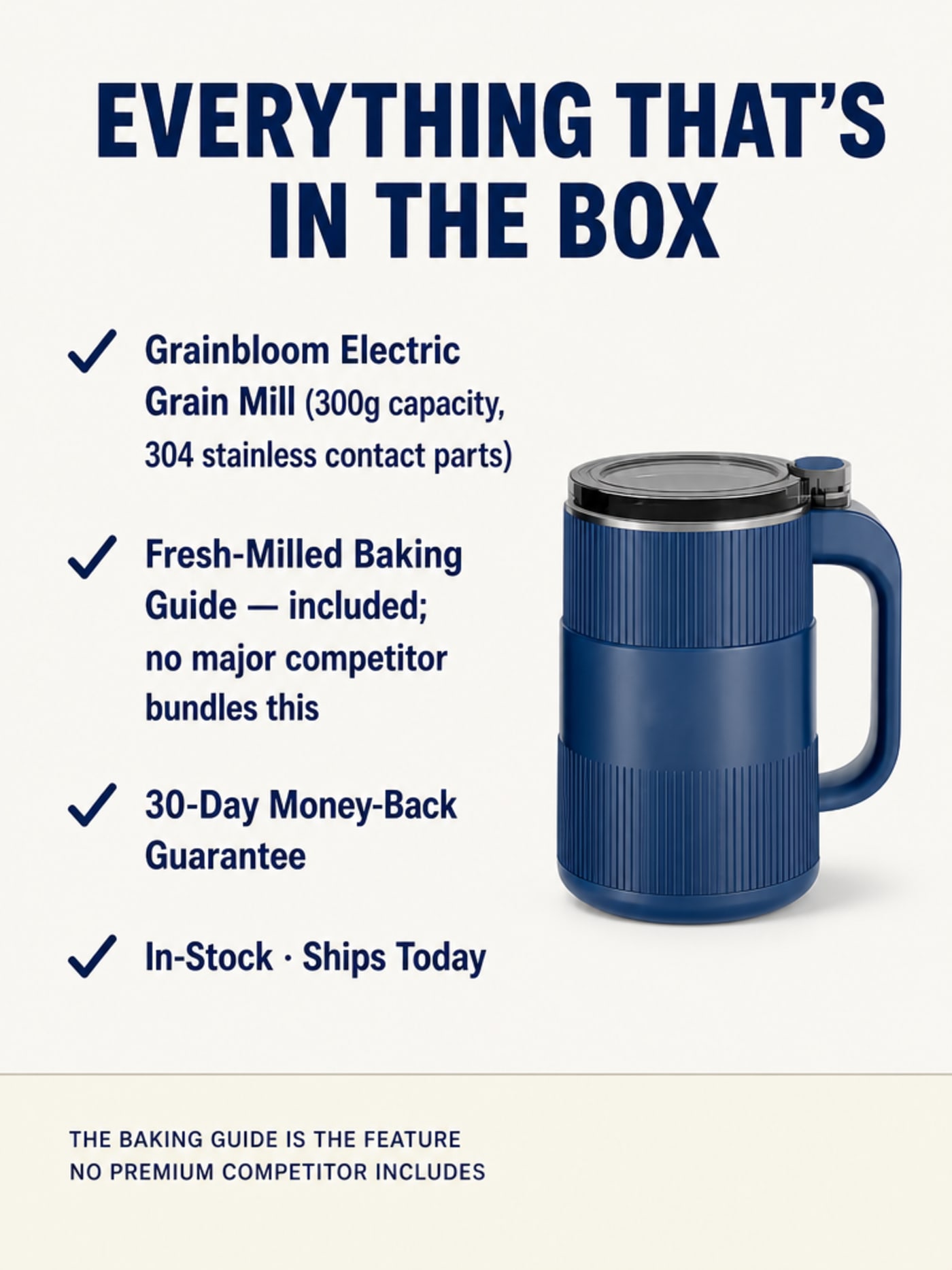
See What's Actually Inside →No assembly guesswork. No hunting for the beginner resource that makes the first loaf work. The Grainbloom ships with everything in the offer:
- The Grainbloom Electric Grain Mill — 300g/batch capacity, one-button operation, 304 stainless steel contact parts
- The Fresh-Milled Baking Guide — bundled with every unit; no major competitor includes this
- 30-day money-back guarantee
- In-stock, immediate shipping
The guide is worth singling out because it solves the documented #1 reason fresh-milling beginners quit. Dense, flat, gummy first loaves — the learning curve that sends people back to the bag. The Fresh Loaf forum has threads about it. The Grainbloom FAQ addresses it directly: "Will my first loaf be bad? Probably." Then it tells you what to do about it. The guide is that answer, in the box.
No premium competitor in the $300–$900 range bundles a beginner baking guide. They sell the hardware. The learning is your problem.
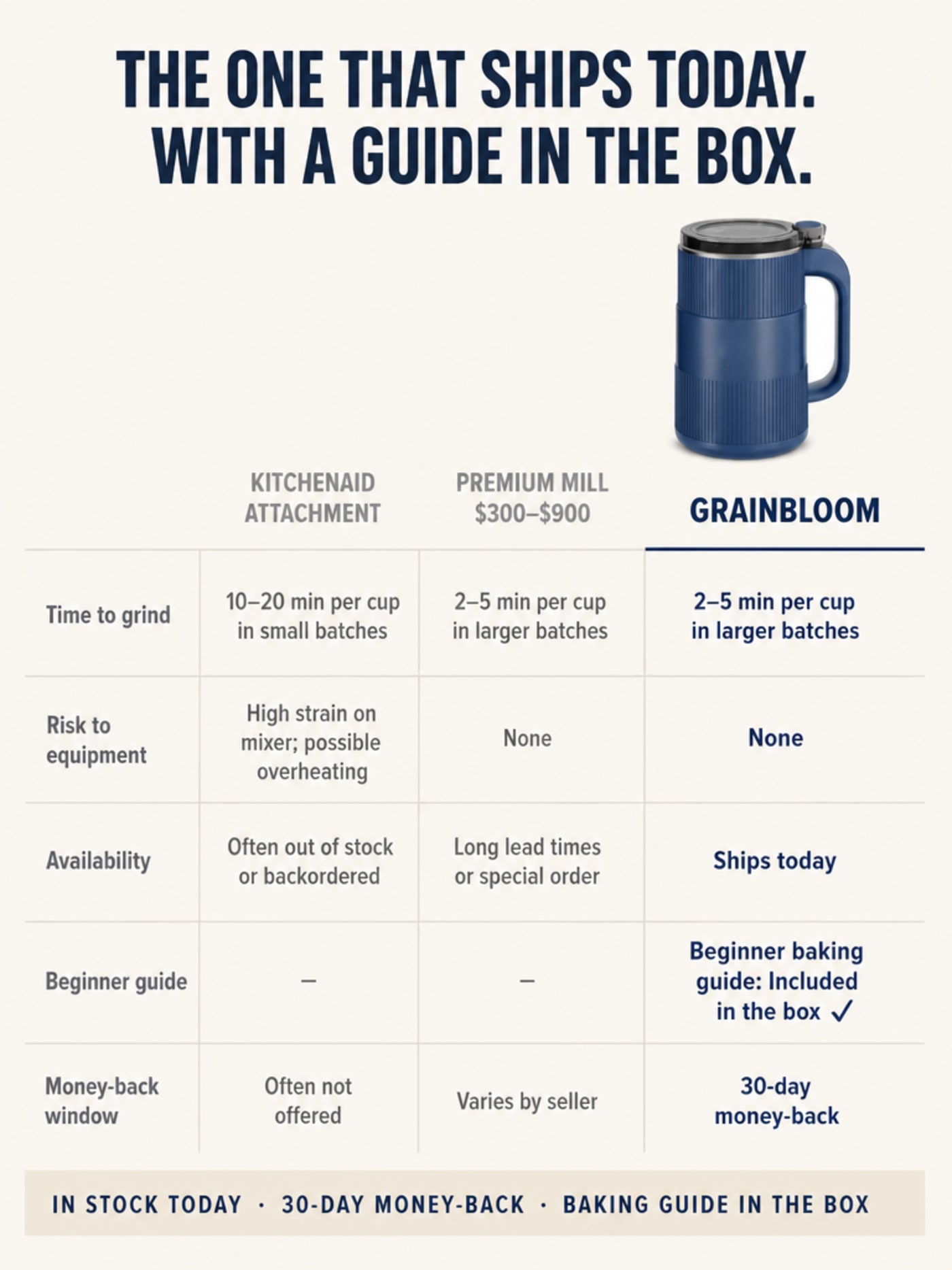
The research you've been doing is real. Here is what it looks like laid out plainly.
The KitchenAid attachment takes ~1 hour for 4 cups with motor rest stops — and it risks burning out a mixer you already own. Premium mills run $300–$900 and are frequently backordered. Neither one includes a beginner baking guide. Neither one offers a standardized money-back window.
The Grainbloom grinds in ~60 seconds per 300g batch. Nothing you already own is at risk. It is in stock and ships today. The Fresh-Milled Baking Guide is in the box. And the 30-day full refund means the first 30 days are yours to verify — on your own terms — before you decide anything about the $400 mill.
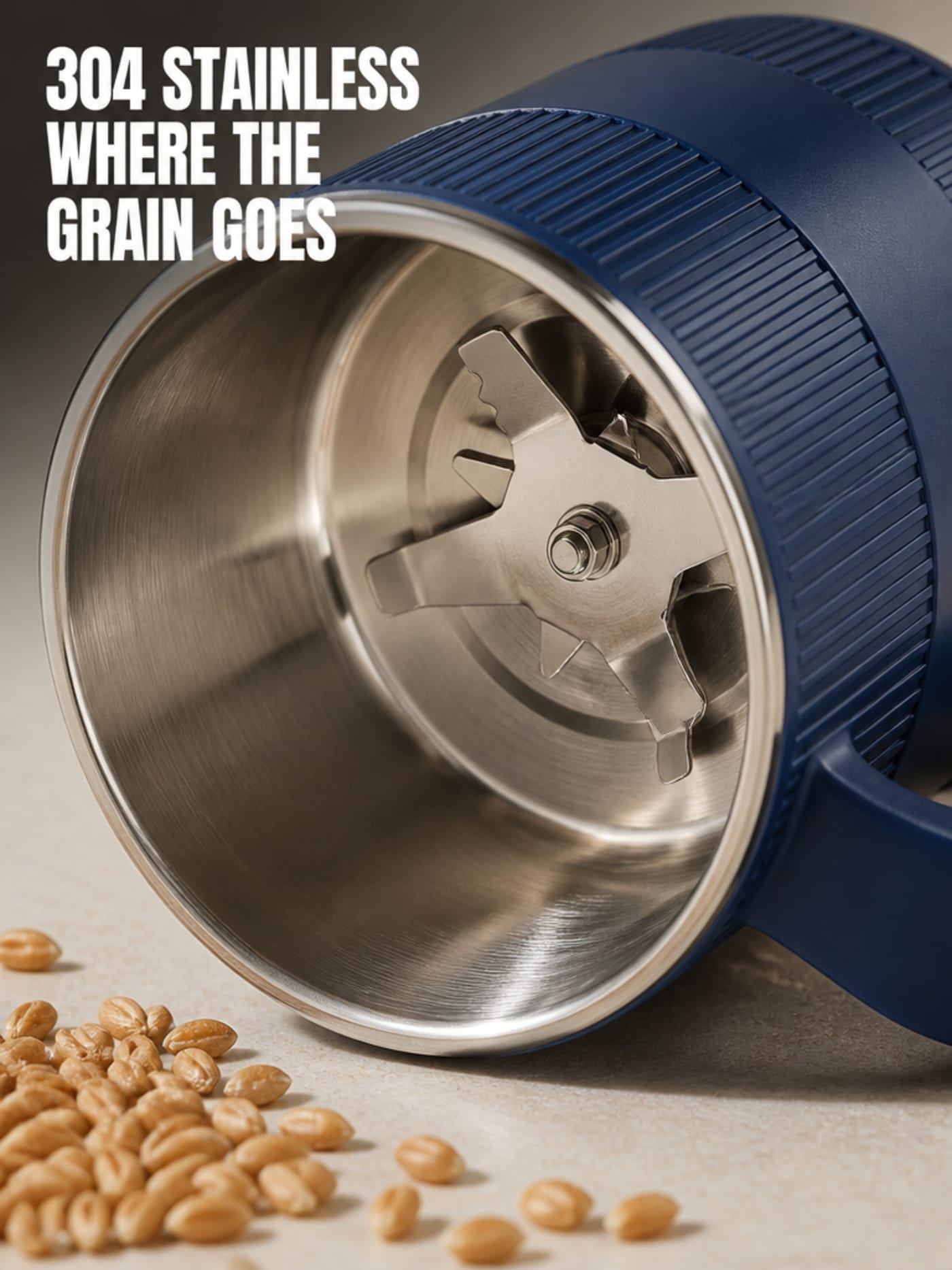
The Grainbloom uses 304 stainless steel for the contact parts — the surfaces that actually touch the grain.
This is not a premium material claim — it's a basic food-safety and durability standard. Cheap high-RPM mills in this price range use plastic components in the grinding chamber. The stainless contact surfaces don't retain flour residue, don't introduce off-flavors, and don't degrade with cleaning.
The honest note: the Grainbloom is a 300-gram swing mill — it is built for regular home use, not for commercial-volume milling. It handles wheat, rye, spelt, einkorn, and similar whole grains. It produces flour suitable for everyday bread baking. It is not designed for back-to-back bulk runs through a 10-pound batch, and the manual says so. If your use case is a large family milling several pounds a day, verify the duty cycle before committing.
For a household baker milling a few batches a week — which describes most people asking the question — the build is exactly what it needs to be.
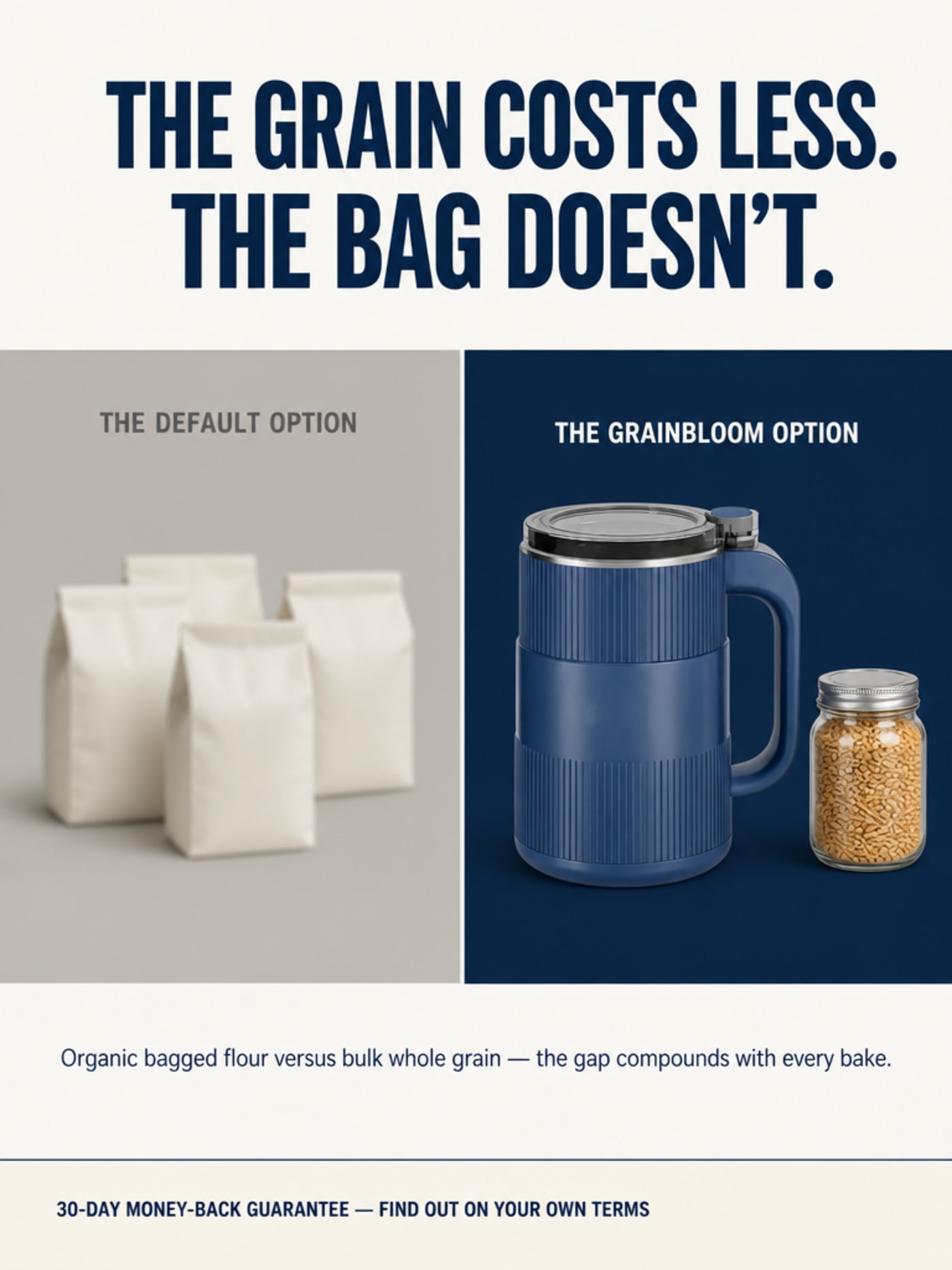
Every week you buy a bag of organic whole-wheat flour instead of milling your own, you are paying roughly $3 a pound. Bulk whole wheat berries run roughly $0.80 a pound in comparable quantities. That gap — per pound, compounded across every bake — is what the category's pricing structure is built on. You pay for the package, the shelf space, the brand. The food is the smallest cost in the bag.
This is not a claim about how fast the Grainbloom pays for itself. The math depends on how often you bake and what you're currently buying. It's a claim about the structural cost of staying in the category's default: buy flour in a bag, pay the markup, repeat.
The alternative — buy grain in bulk, mill what you need, store the rest — is what the Grainbloom makes accessible at the lowest entry cost in the category.
Now. The honest problem with this mill.
The Grainbloom grinds in roughly 60 seconds per 300-gram batch — about two-thirds of a pound. If you are baking for a large family and want to mill several pounds in a single session, you will be running multiple sequential batches. The Grainbloom's documentation does not publish a formal duty-cycle spec — verify this directly before committing if batch volume is a concern for your household. For a regular baker doing one or two loaves a week, it is not an issue. For a bulk-milling use case, it may be.
The 30-day guarantee means you find this out on your own terms.
How It Compares to What You've Been Looking At
Everything you just read is also what you find on the next page — plus the thing this page won't show you.
See the Full Breakdown →The Grainbloom ships with a 30-day money-back guarantee.
Here is what that actually means for a decision like this one.
You press the button. You mill a batch. You bake a loaf — probably a dense one, if the FAQ is being honest with you. You read the guide. You bake another one. You find out, in your own kitchen, over your own bakes, whether fresh milling is for you.
If it isn't — if after 30 days of real use you decide it's not the right fit — you return it. That's the deal.
The guarantee isn't the product. The product is the mill and the guide and the grain you'll buy. But the guarantee is what makes this experiment feel exactly like what it is: an experiment, not a commitment. Thirty days to verify on your own terms before you decide anything about the $400 mill.
Is Grainbloom Electric Grain Mill Right For You?
- You've been comparing grain mills for weeks and want to find out if fresh milling is for you before spending $300–$900 on a premium machine
- You bake sourdough, sandwich bread, or whole-grain recipes regularly and want to know where your flour actually comes from
- You own a KitchenAid and have been eyeing the grain-mill attachment — but don't want to risk the mixer to find out if milling is worth it
- You care about buying food that hasn't been sitting in a warehouse since it was processed — and want a practical, low-friction way to act on that
- You need to mill several pounds of flour in a single session — verify the duty cycle before committing; this is a 300g/batch mill
- You are looking for pastry-fine flour for delicate applications — the honest scope is everyday bread baking, not specialty pastry fineness
- You want a machine built to last a decade under daily heavy use and are willing to pay for that durability — the premium mills are the right answer for that use case
The grain-mill category has a structural problem: it asks you to commit several hundred dollars before you've learned enough to know whether fresh milling will stick. The Grainbloom is the cleanest answer to that problem in the current market. One button. About 60 seconds. A beginner guide no major competitor bundles. A 30-day window to find out on your own terms. It is not the last grain mill you will ever buy. It might be the one that makes you confident enough to know whether you want the next one.

The next page shows you the full offer — the mill, the bundled Fresh-Milled Baking Guide, the 30-day guarantee, the shipping. Everything that was described in this review, priced and displayed so you can check it before you commit to anything. The Baking Guide is in the box. The guarantee means the first 30 days are yours to test. The mill is in stock and ships today. Nothing on the next page asks you to already be sure. It shows you what you're deciding, clearly, and lets you decide.