7 Reasons Grainbloom Is the Only Grain Mill Worth Buying Before You've Spent $400 Finding Out If You'll Actually Use One
Every grain mill in the $300–$900 range promises transformation. Most shoppers agonize for weeks, order the expensive one, and either love it — or discover it living in a cabinet six months later. There is now a smarter sequence.
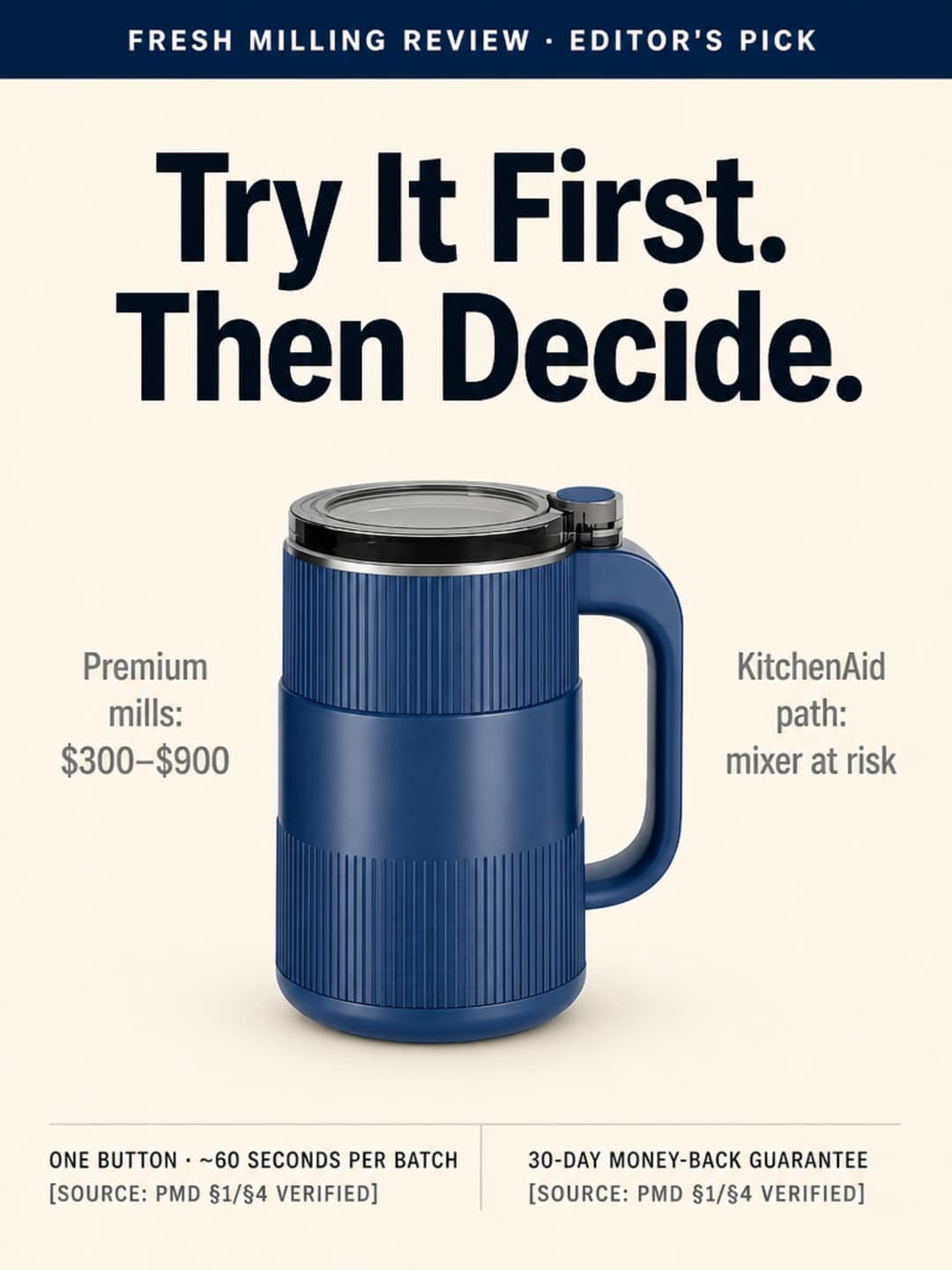
You've been comparing grain mills. You've read the forums, bookmarked the $300 options, maybe even added one to a cart and pulled back. The category has a structural problem: every path into fresh milling asks you to bet big before you know whether you'll stick with it. Premium mills backorder. The KitchenAid attachment has a documented motor-burnout problem. The cheap mills run hot and die. Nobody in this category has offered a real try-first option. That's the gap Grainbloom fills — and it's the only gap in this market that actually matters for someone in the comparison phase.
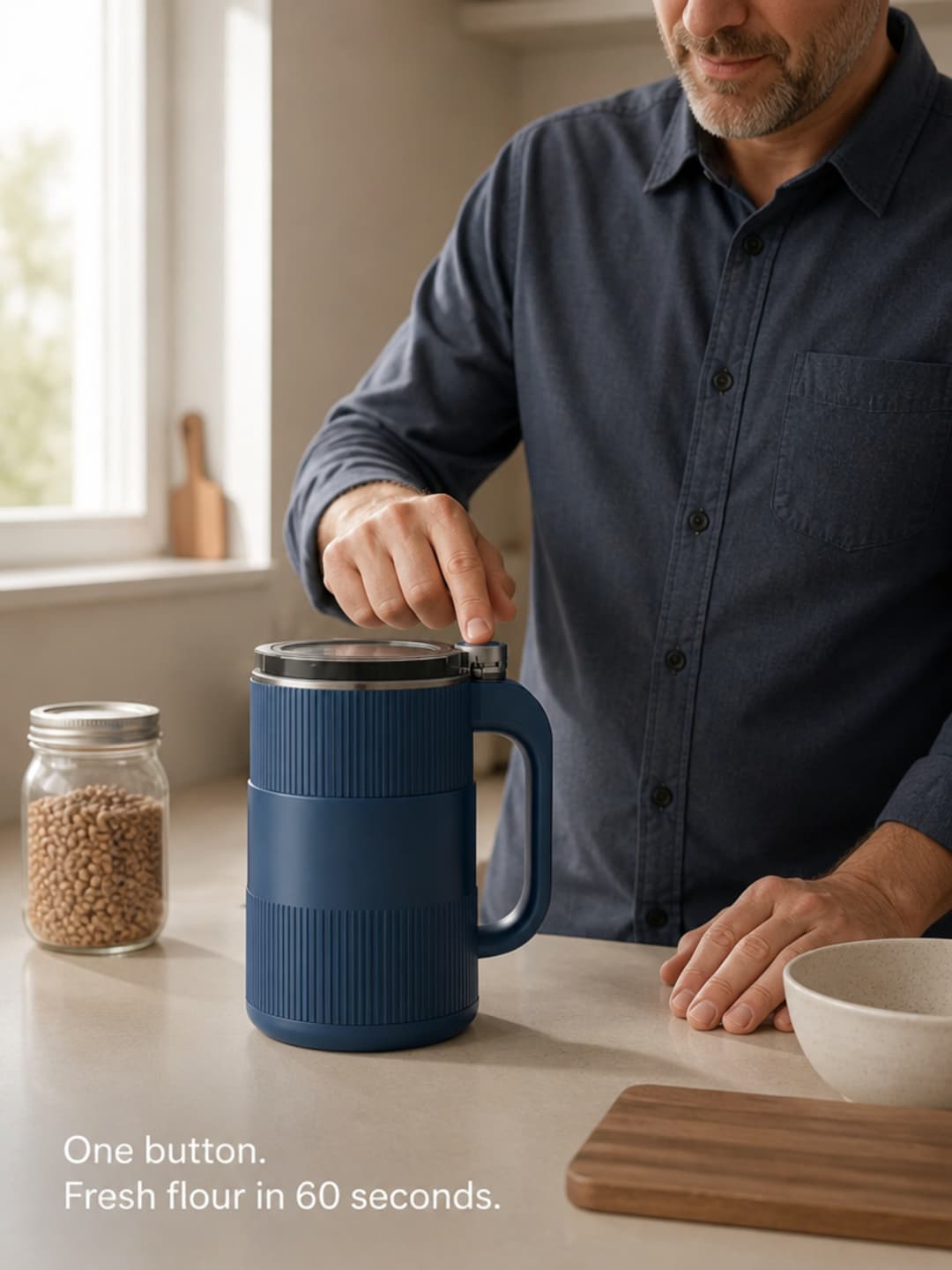
Grainbloom is built for where you actually are: convinced that fresh flour is better, not yet certain you want to restructure your baking practice around a $400 machine. One button. One batch in about 60 seconds. Thirty days to decide whether this belongs in your kitchen permanently. And the Fresh-Milled Baking Guide is in the box — because the #1 reason people quit fresh milling isn't the mill, it's the first few dense loaves nobody warned them about.
"I am racking my brains out trying to choose one… they are $1,000!"
The most upvoted reply in those threads is almost always the same advice: play with something you can afford to try, see if you actually like it, then buy the premium mill. That's not a compromise — that's the experienced baker's sequence. The comparison-paralysis phase is real, it costs time, and it costs money in the form of expensive bagged organic flour you keep buying while you decide.
As one experienced baker put it: "play with what I can easily buy and see if I even like it… AND THEN… I'd go out and buy a Nutrimill."
That simplicity is load-bearing. The mills that end up in cabinets — and they do end up in cabinets, across every price point — get there because the friction of using them compounds. Every extra step is a reason to skip it today. A one-button 60-second process doesn't give you a reason to skip.
Ready to stop comparing and start milling?
See What's Actually Inside →What ships with every Grainbloom:
• The Grainbloom Electric Grain Mill (countertop, 304 stainless steel, single-button operation)
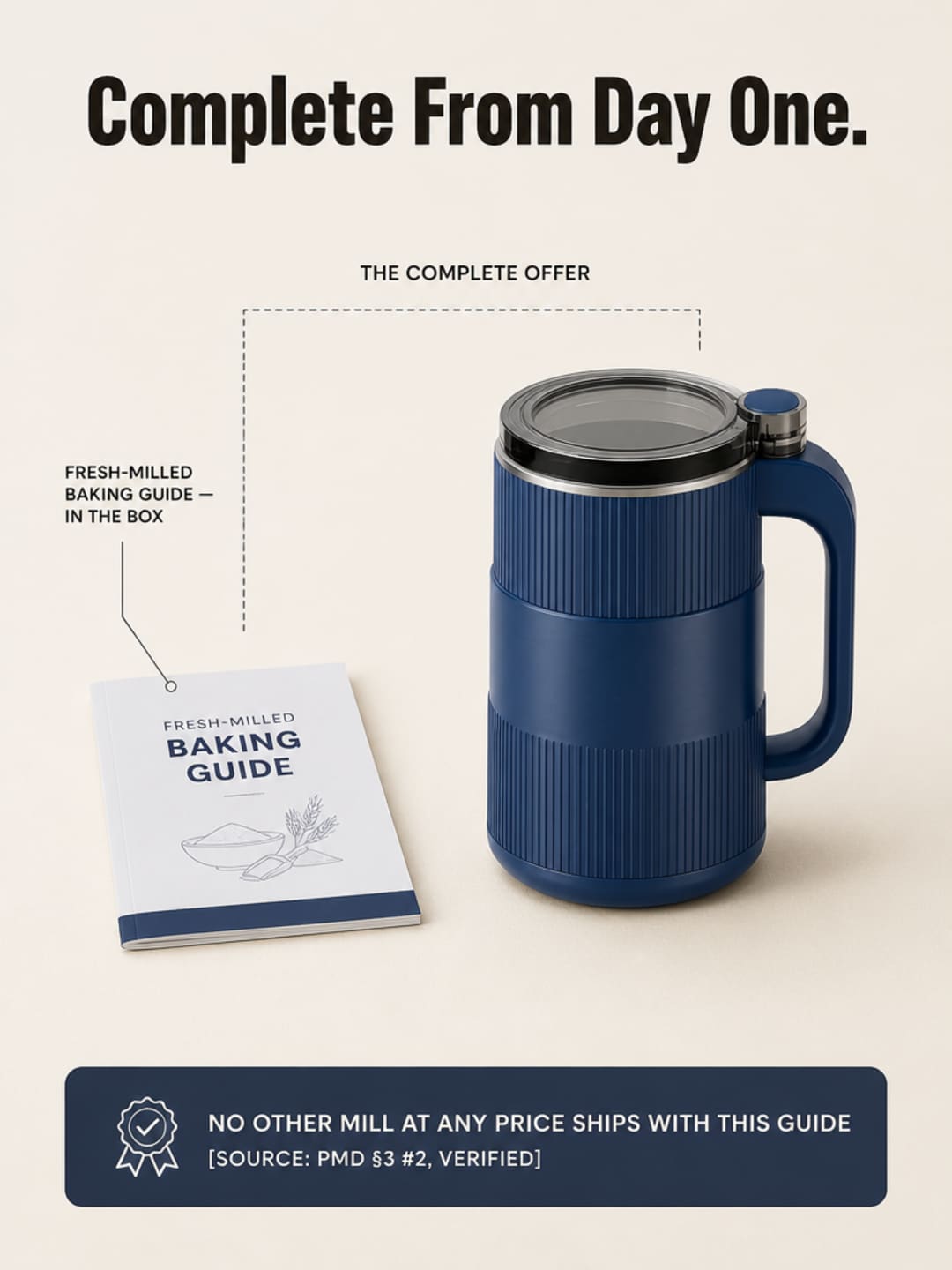
• The Fresh-Milled Baking Guide — the technique resource that addresses the dense-loaf failure mode that makes beginners quit
No premium mill in the $300–$900 range ships with an equivalent beginner guide. Not one. The guide isn't a PDF link or a QR code to a website — it's a physical document in the box. The dense-loaf problem has causes and it has fixes. They're written down and they ship with the product.
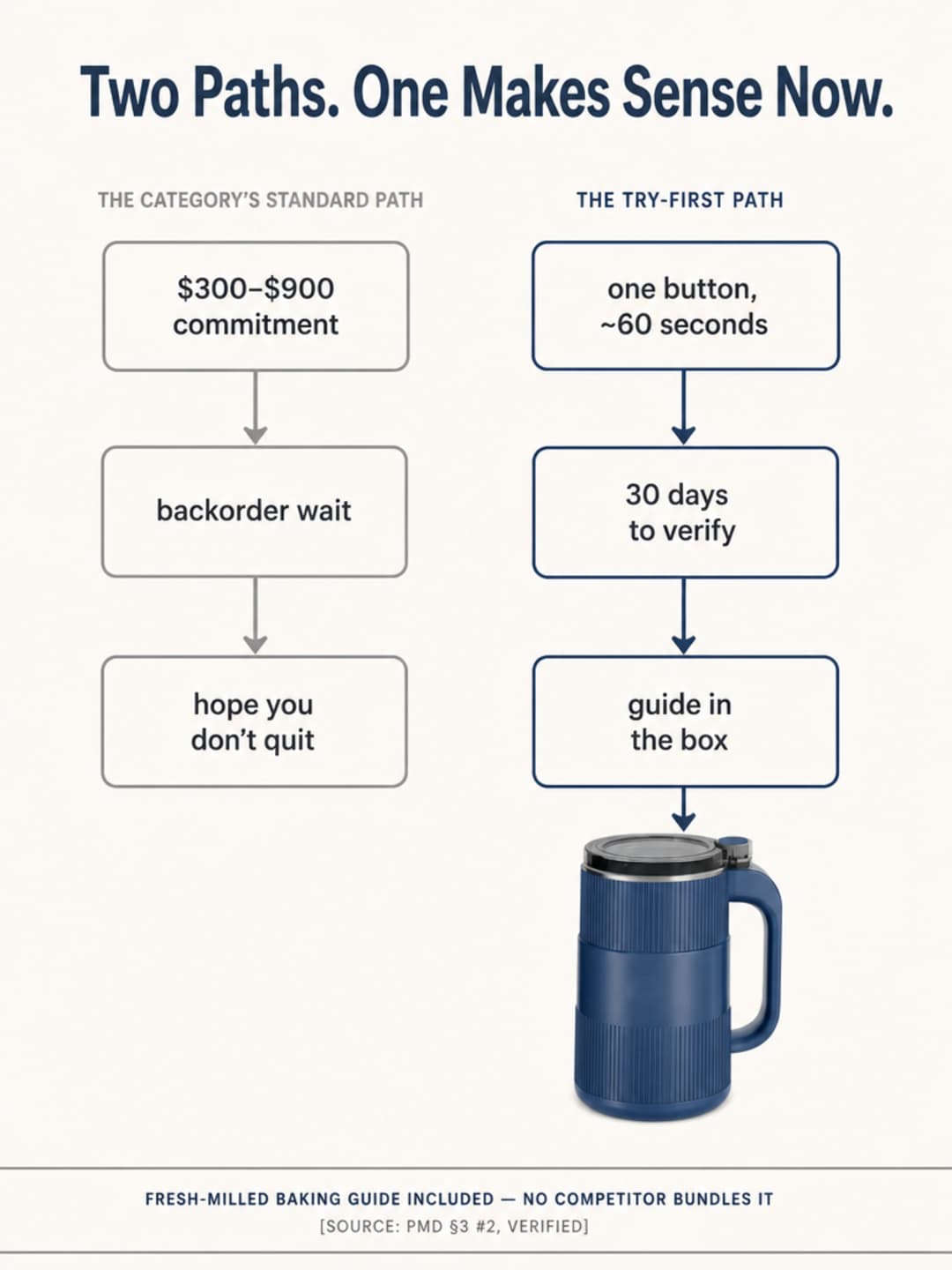
The KitchenAid grain-mill attachment path: The attachment costs $179. It fits your existing stand mixer. Reviews are consistent: "The motor gets hot. I had to keep stopping… about an hour to grind 4 cups." One Home Depot reviewer: "Broke my KitchenAid head tilt mixer after one use." The attachment grinds coarse. And you're still buying bags of organic flour at ~$3/lb.
The premium standalone mill path: Genuinely capable machines in the $300–$900 range. Frequently on backorder. No beginner guide. A significant financial commitment before you've baked a single loaf with fresh-milled flour.
The Grainbloom path: One button. ~60 seconds per 300g batch. Guide in the box. Thirty days to decide. Ships today.
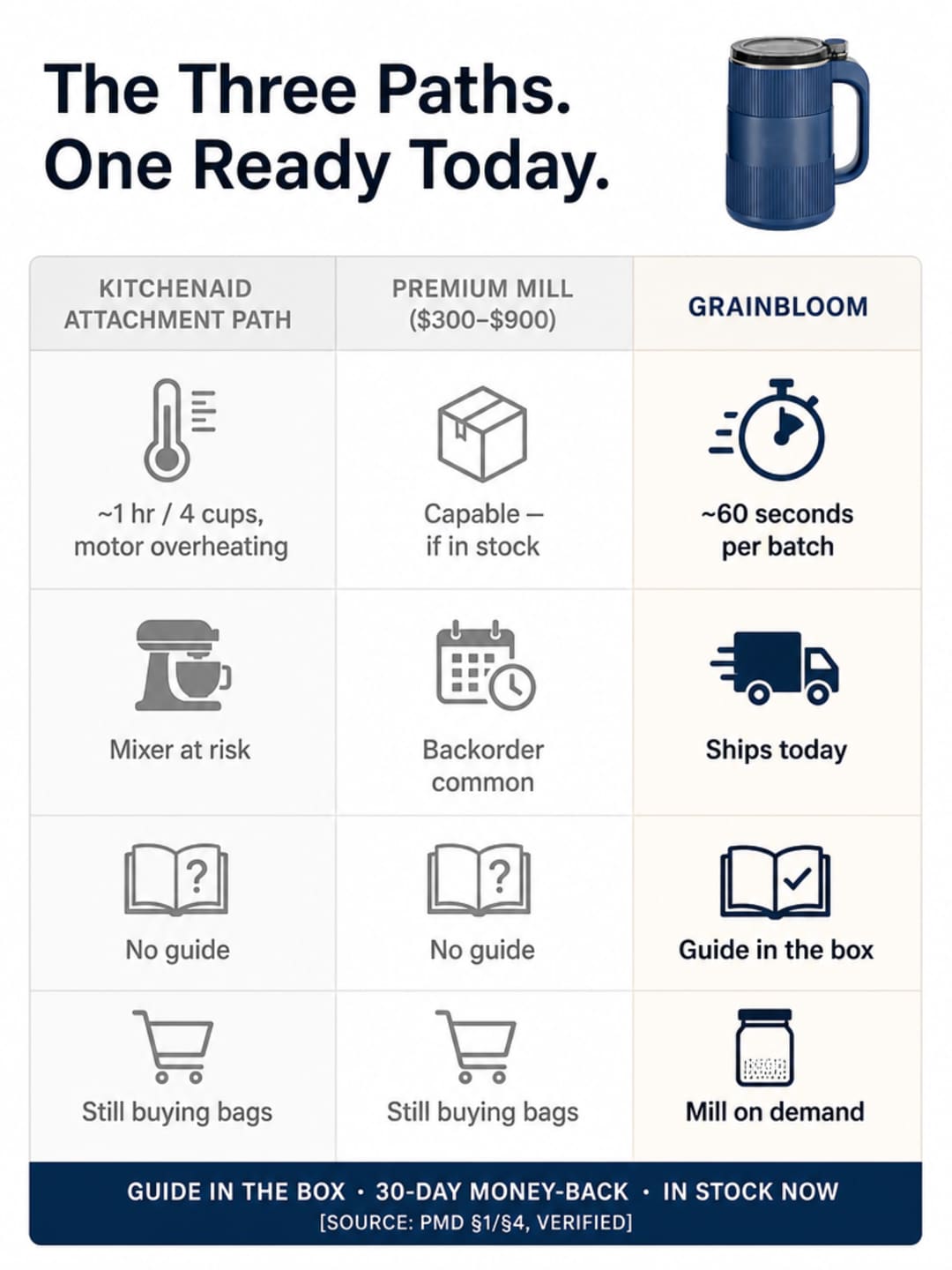
This matters for one practical reason: grain is abrasive. High-RPM grinding generates heat and physical wear. A contact surface that won't leach material into the flour is a baseline requirement, not a premium feature. It's worth knowing what you're grinding into.
The mill's overload protection cuts power before the motor can burn out on a stuck batch — a documented failure mode in the cheap high-RPM category that runs 3-minute duty cycles and uses carbon brush motors as consumables.
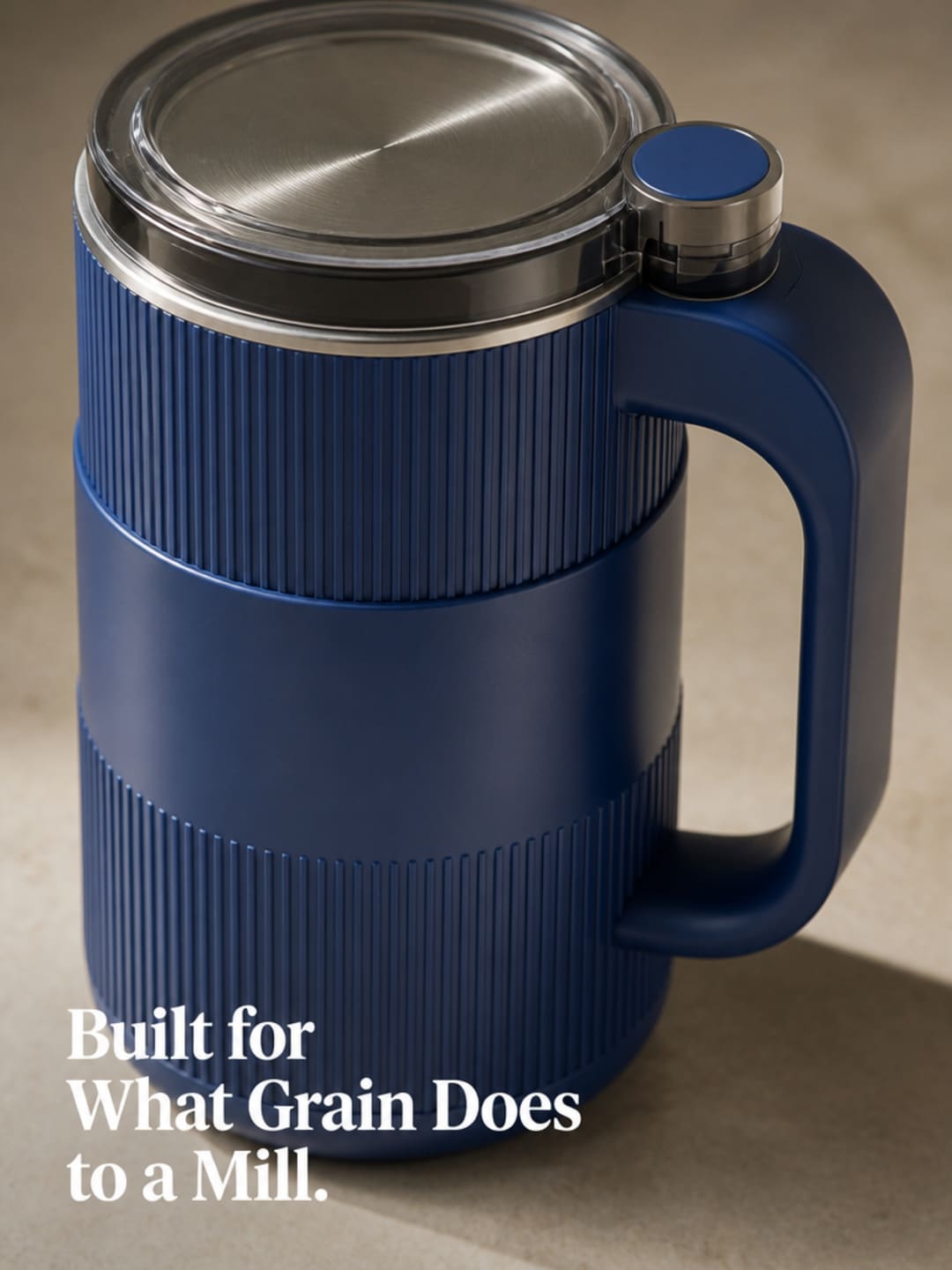
That gap is there every loaf, every week. It compounds. The comparison phase has a cost — it just doesn't show up as a single transaction.
The other cost is less measurable: the mills you've been researching backorder. When you finally decide on the $400 option, you may wait weeks for it to ship. Grainbloom is in stock.
The honest admission: Grainbloom is not the most powerful grain mill ever made. If you bake commercially, or you know with certainty that you want a belt-driven stone mill for the long term, buy that. This page will not pretend otherwise. Grainbloom is the best first mill — the one that ends the comparison paralysis, gets flour into your kitchen this week, and gives you 30 days to decide whether you want to upgrade. Some people will. Many won't need to.
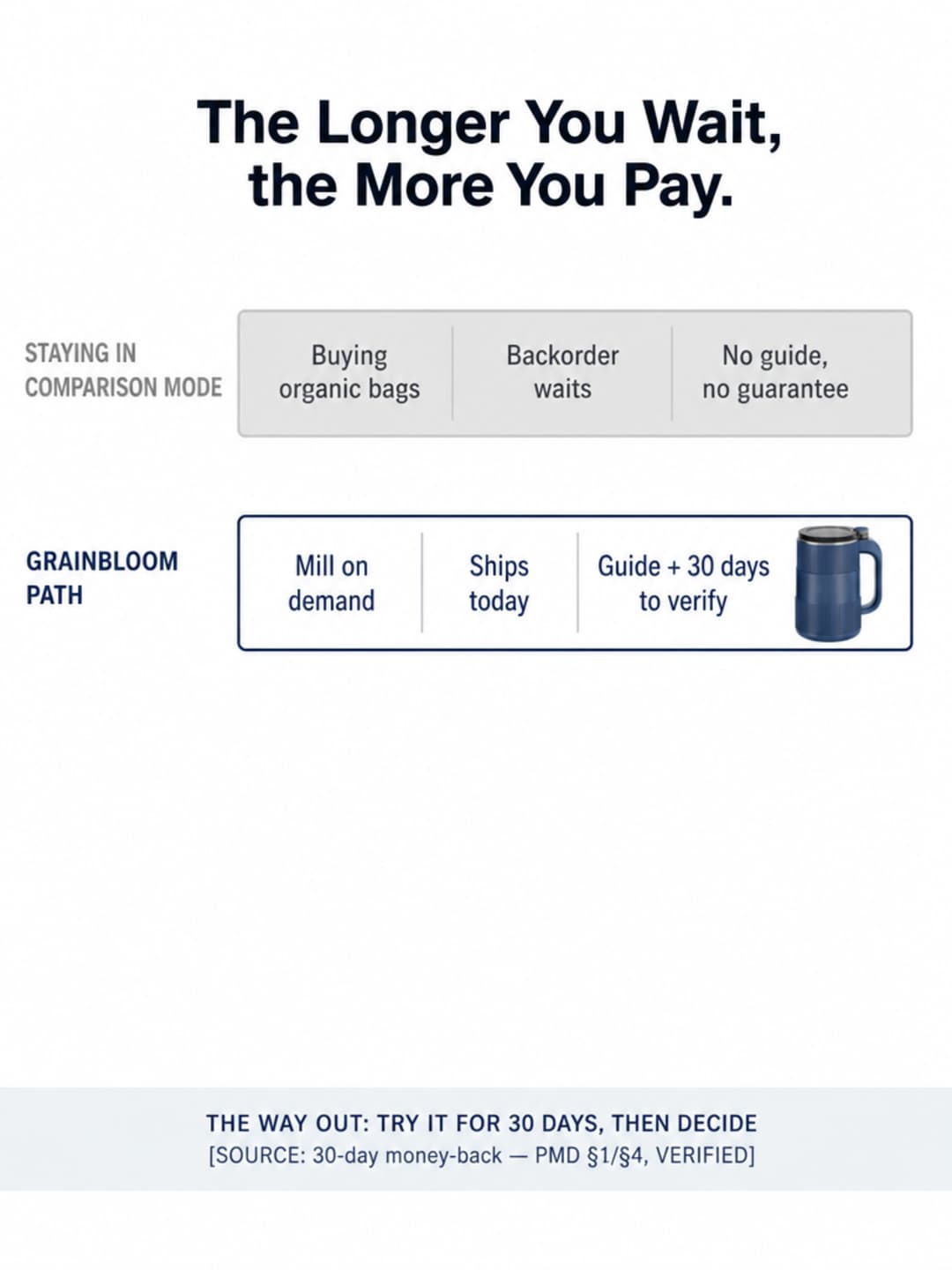
How the Paths Compare
The comparison is complete. The next page has everything else.
Try It Risk-Free →Is Grainbloom Electric Grain Mill Right For You?
- You've been researching grain mills for weeks and haven't pulled the trigger because the price commitment feels too large before you know you'll use it
- You bake sourdough, whole-grain loaves, or from-scratch staples regularly and want flour that hasn't been sitting in a warehouse
- You've tried store-bought whole wheat flour and found it flat, oxidized, or cardboard-tasting — and want to understand what milling fresh actually changes
- You want the running-cost benefit of buying grain in bulk (~$0.80/lb berries vs. ~$3/lb organic flour) but don't want a $400 commitment before you know your workflow
- You are a commercial or high-volume baker who needs continuous-batch capacity — verify duty-cycle specs before purchasing
- You have already committed to fresh milling as a permanent practice and want the most capable long-term machine regardless of upfront cost — the premium mills earn that slot
- You're looking for pastry-fine flour; the fineness spec for this category of impact mill suits everyday bread baking, not all specialty applications
Grainbloom fills a gap the premium mill market created and never bothered to close: the guided, low-risk way to find out whether fresh milling belongs in your life before you commit $400 to the answer. The bundled Baking Guide is the detail that separates this from every other entry-price option — the dense-loaf failure mode is documented, predictable, and solvable, and most beginners hit it alone. You won't. The 30-day guarantee turns the question from a bet into a test. Run the test.
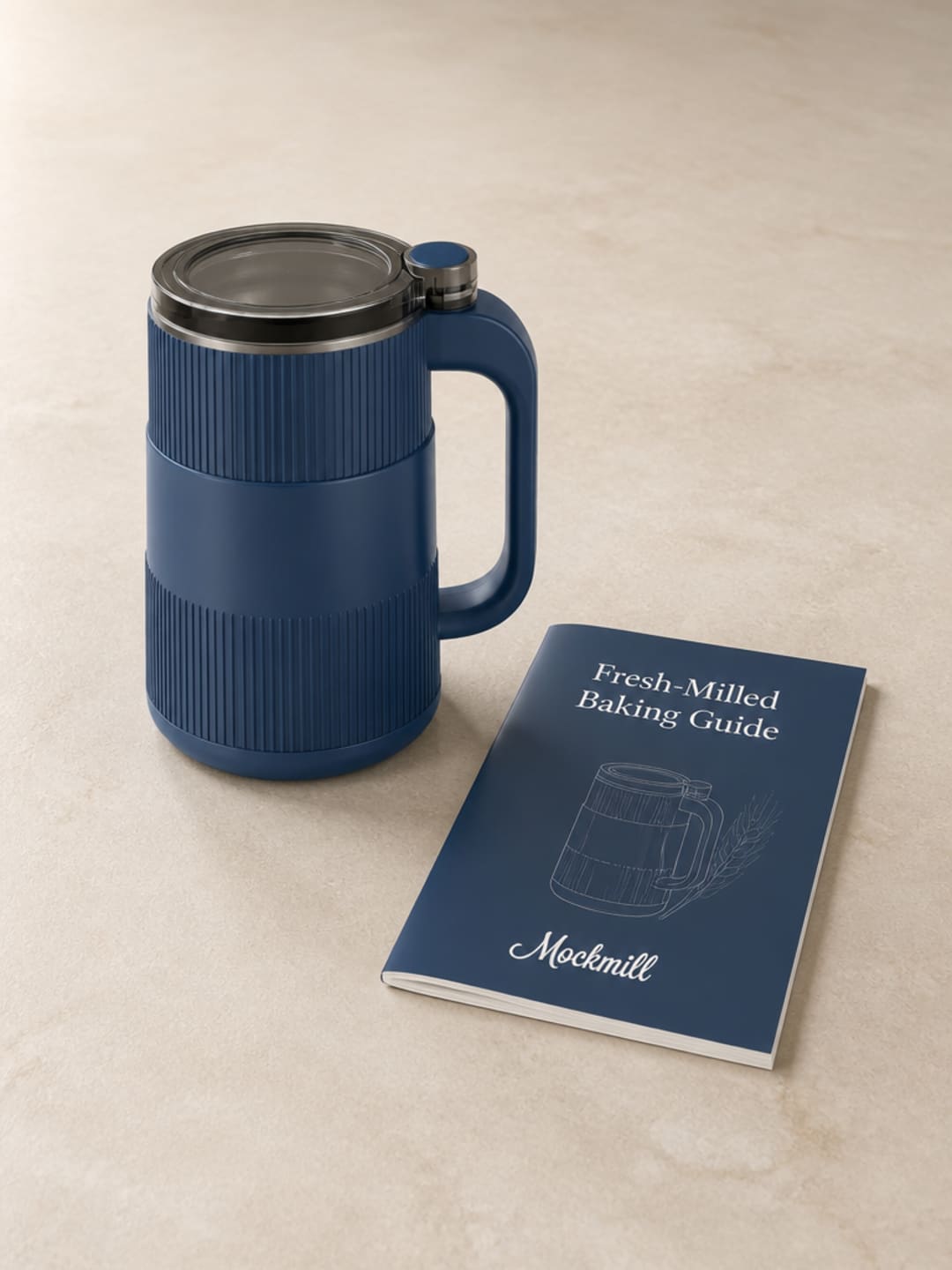
When you click through, you'll find: the complete product and bundle components, the full offer details, the Baking Guide description, and everything you need to verify the purchase before you commit. The 30-day money-back is there in plain language. Shipping information is there. The guarantee terms are there. Nothing is hidden behind a checkout. The mill that ends the comparison phase ships today.