7 Reasons Grainbloom Is the One Grain Mill That Actually Ships With the Fix for Flat Bread
Every grain mill on your comparison list promises fresh flour. Not one of them ships with the guide that stops you from quitting after your first dense, failed loaf. Grainbloom does — and that changes the entire comparison.

If you have spent more than a week comparing grain mills, you already know the shape of the problem: the premium options run $300 to $900 and regularly backorder. The cheap high-RPM alternatives overheat and break. Neither category answers the question that actually keeps people from clicking buy — what if I spend the money, do everything right, and my bread still comes out like a brick? The category sells hardware. Nobody sells the fix for what happens after you get it home.
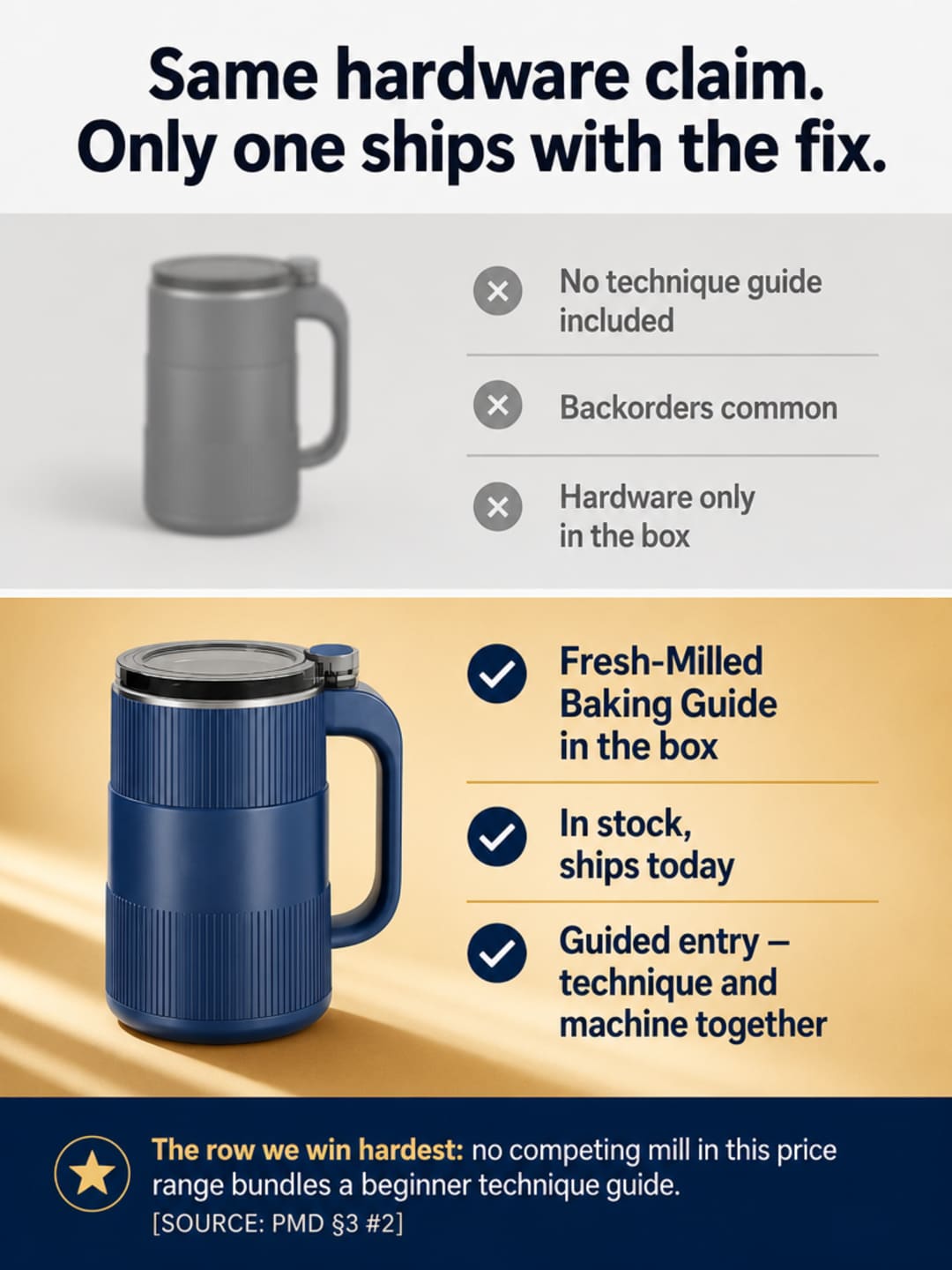
Every grain mill you have priced promises fresh flour. None of the mills in the $300–$900 range bundles a technique resource for the person who has never milled before. Neither do the cheaper alternatives. The assumption baked into every competitor's box is that you already know how to bake with fresh-milled flour — or that you will figure it out.
That assumption is why the forums are full of threads about dense, flat loaves. Fresh-milled flour absorbs water differently than store flour. It behaves differently in a dough. The standard bread recipe on your shelf was written for store flour. None of that is stated anywhere on a NutriMill or Mockmill box, because neither ships with anything that addresses it.
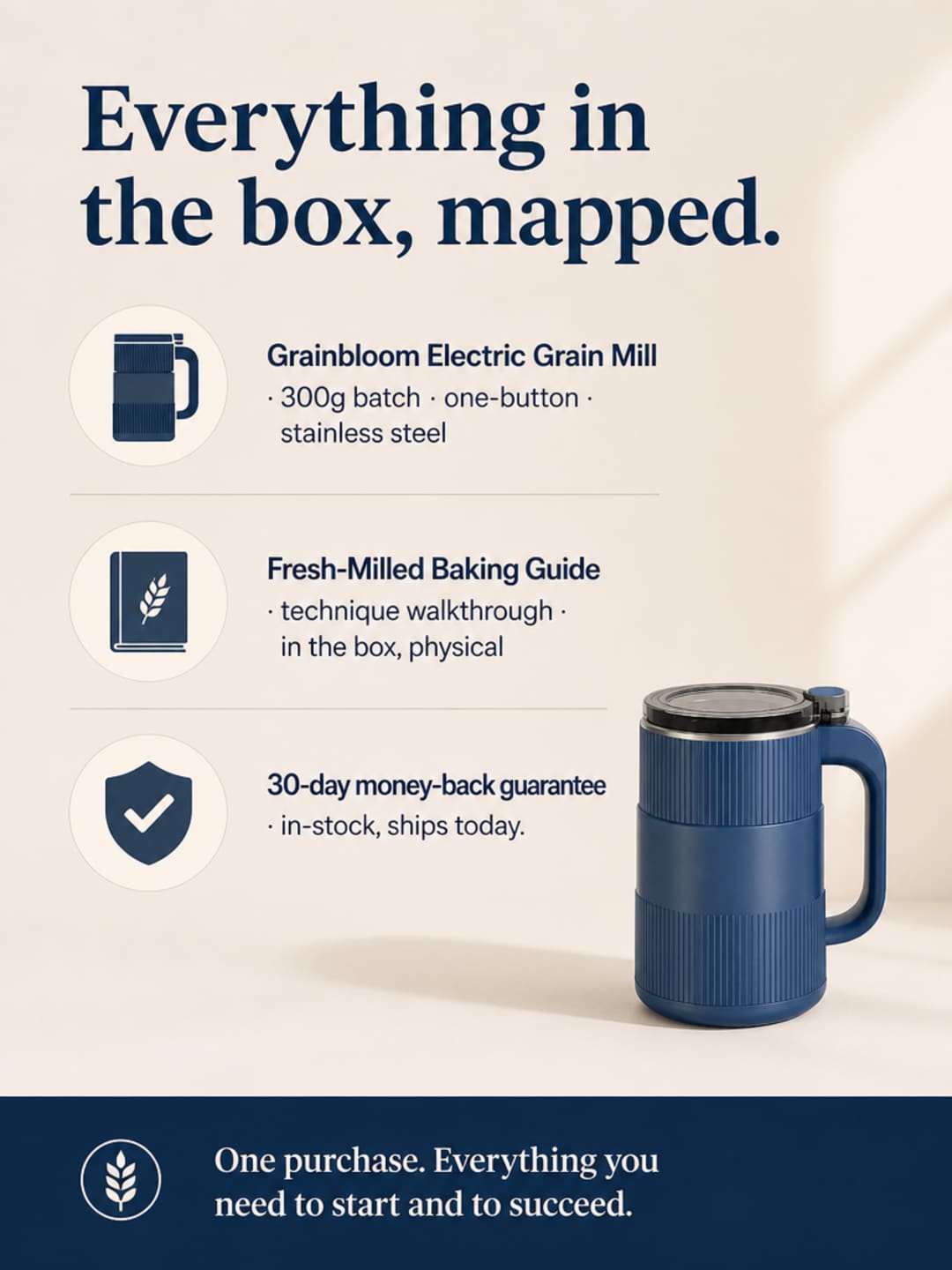
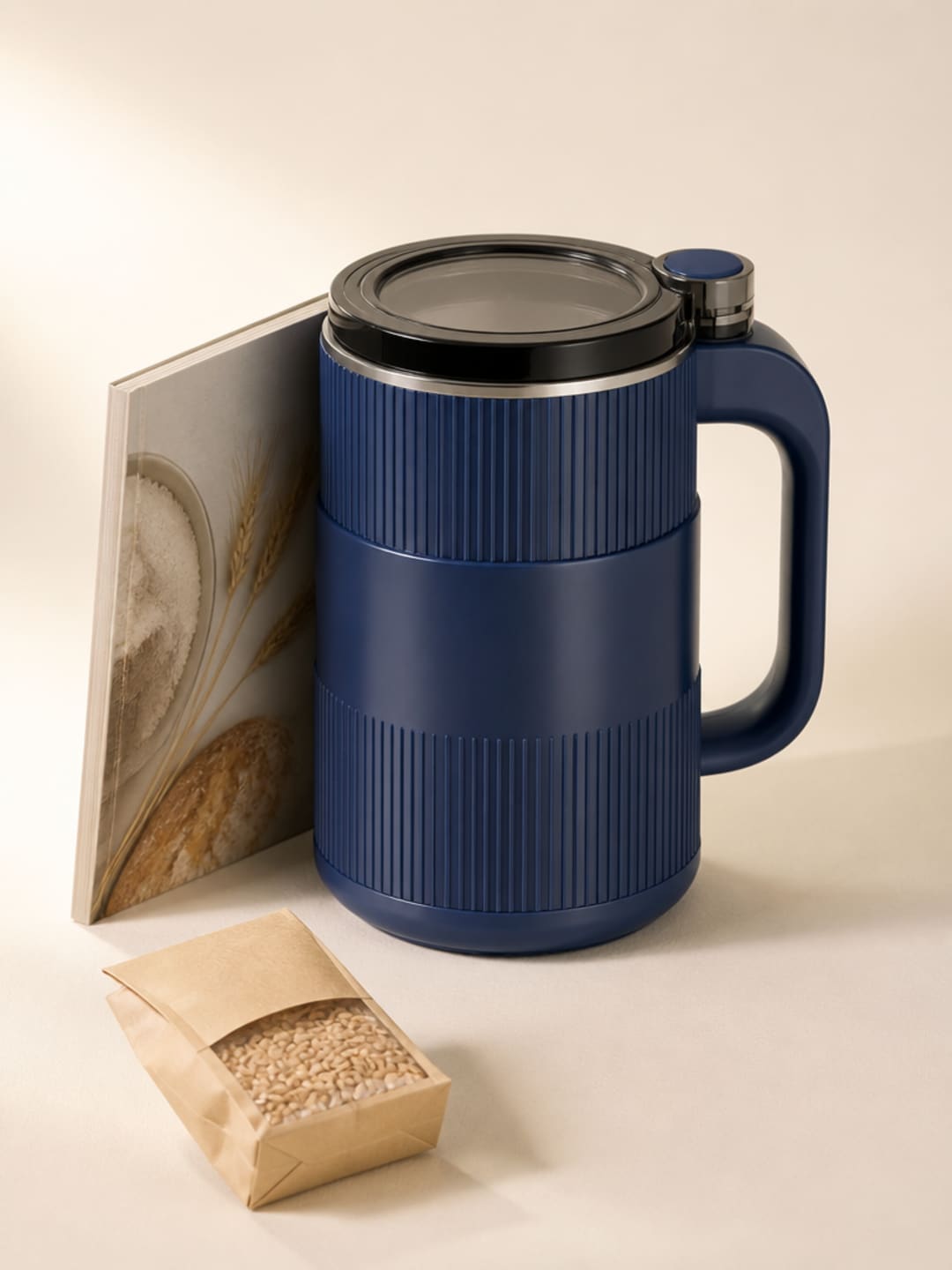
Grainbloom ships with the Fresh-Milled Baking Guide. It is in the box. It is not a PDF you might receive by email, not a link to a website. It is a physical technique walkthrough designed around the specific adjustments — hydration, rest times, blend ratios — that make the difference between a loaf that works and one that ends up in the bin. No other mill in this price range includes it.

The Fresh Loaf forum has accumulated thousands of threads on this topic. The pattern is consistent:
"My loaves are a disaster. The bread keeps collapsing."
This is not a bad-mill problem. The flour is fine. The mill is fine. Fresh-milled flour simply behaves differently than store flour — it absorbs more water, the bran particles interfere with gluten development, and the hydration ratios in a standard bread recipe do not account for any of it. The result is a dense, gummy, or flat first loaf. Sometimes a second and a third.
The documented failure rate for new fresh millers who have no technique guide is high enough that Grainbloom's own FAQ states it plainly: "Will your first loaf be bad? Probably." What follows that admission is the answer: and that is what the Guide is for.
The forum record shows that the failed-loaf thread is among the most common recurring topics in every fresh-milling community — dense bread is described across multiple community sources as the "#1 complaint."
Here is what the Guide does, in plain terms.
Fresh-milled flour contains the whole grain — bran, germ, endosperm — nothing removed, nothing added back synthetically. That completeness is the reason people mill at home. It is also the reason a recipe written for refined store flour does not translate directly. The bran particles continue absorbing water after the dough is mixed, which means your dough may appear properly hydrated and then tighten up during bulk fermentation, producing a dense crumb and poor oven spring.
The Guide addresses this at the source. It covers the specific hydration adjustments for fresh-milled flour — how much additional water a fresh-milled loaf typically requires relative to a store-flour equivalent. It covers blend ratios: how much fresh-milled flour to incorporate alongside store flour as you build your feel for the ingredient, so that your bread is never inedible while you are learning. It covers rest times — the autolyse and extended fermentation windows that allow bran particles to fully hydrate before the gluten network sets.
None of this is proprietary or secret. All of it is the kind of information experienced fresh millers carry in their heads after years of trial and error. The Guide gives it to you in the first batch. The mill runs at the press of one button. A 300-gram batch processes in roughly 60 seconds. The machine's job is simple. The Guide's job is to make sure the result of using it is bread you want to eat.

You have read what is in the box. What is on the next page is the complete offer — the mill, the Guide, the guarantee terms, and everything you need to decide before spending a dollar.
See What's Actually Inside →The offer is: one electric grain mill. One Fresh-Milled Baking Guide. One 30-day money-back guarantee.
The mill is a single-button countertop unit. 300-gram batch capacity. Stainless steel construction. One-button operation; the process is pour grain, press button, collect flour — no settings to calibrate, no adjustment required for a first batch. Approximately 60 seconds per batch.
The Guide is physical, in the box. Not a digital supplement. Not a QR code to an external resource.
The guarantee is 30 days from delivery. That is enough time to mill several batches, bake at least four or five loaves, work through the Guide's technique adjustments, and form an honest opinion of whether fresh milling is part of your routine. If it is not, the return window is open.
In-stock, ships immediately.
The comparison is not mill-against-mill on hardware specifications. Every review of grain mills in this category eventually reaches the same conclusion: the premium mills are technically superior machines. That is not the disputed point.
The disputed point is what actually causes people to stop using their mill.
The category's documented failure modes are:
KitchenAid grain-mill attachment: One reviewer documented it taking approximately an hour to grind four cups of flour. Separate documented reports describe motor strain and mixer burnout on first use: "Broke my kitchen aid head tilt mixer after one use." The attachment is coarse. It is slow. It carries real hardware risk to equipment you already own.
Premium standalone mills ($300–$900): Excellent machines. Frequently on backorder. None bundles a technique guide. You receive a superior mill and the same first-loaf problem every new miller encounters.
Cheap high-RPM alternatives: Manufacturer duty-cycle documentation indicates a 3-minute operational limit before required rest. Carbon brushes as consumables. Documented overheating and short product lifespans.
Grainbloom is not the best-engineered mill in the category. It is the only option that addresses, in the box, the failure that causes people to stop using whichever mill they bought.
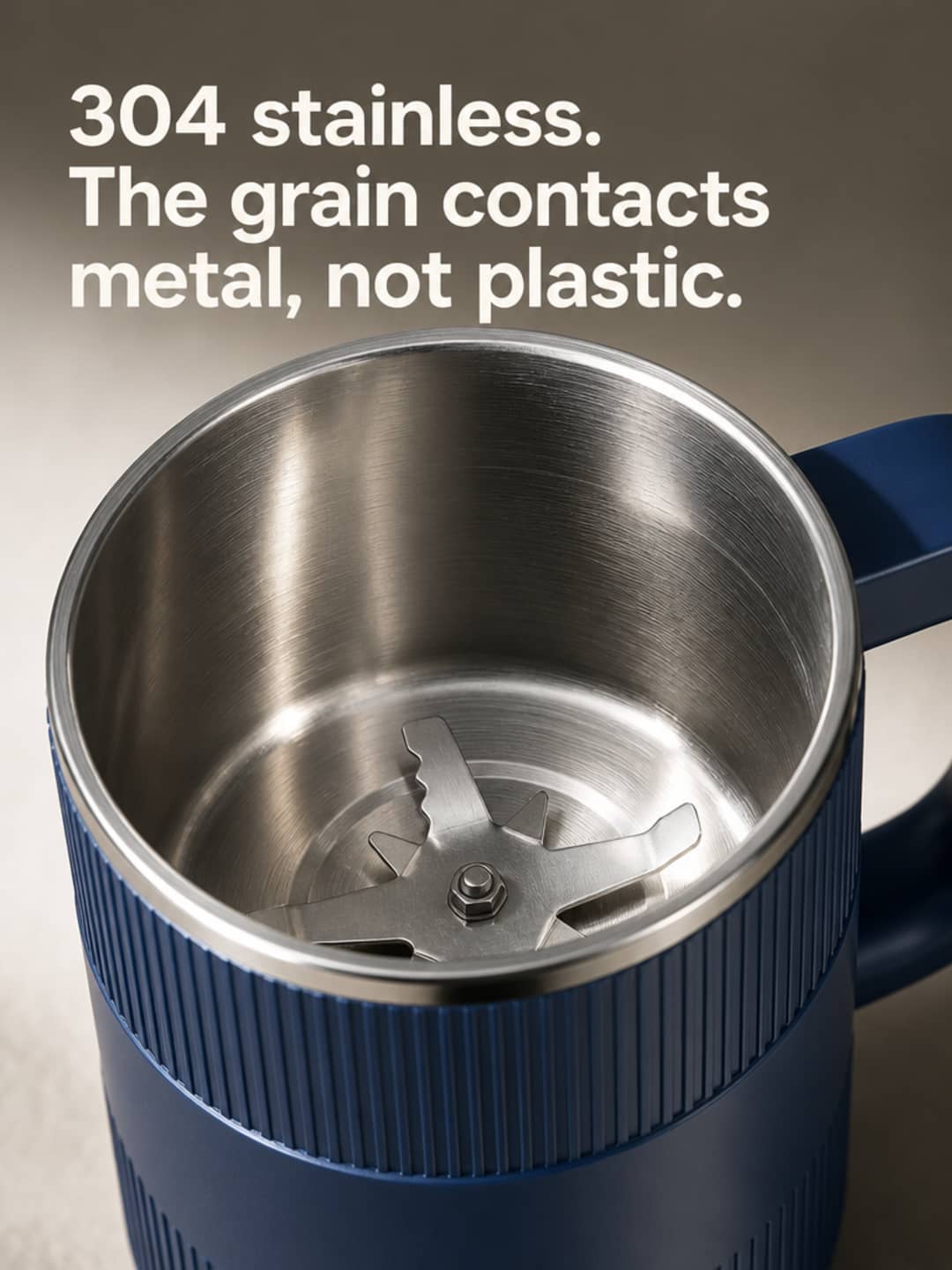
The Grainbloom mill is constructed with 304 stainless steel. This is relevant not for prestige reasons but for a practical one: the parts in contact with the grain and the resulting flour are the same material used in food-preparation equipment intended for regular use. No plastic in the grinding contact zone.
The unit is countertop-sized. Not a small appliance that gets tucked away because it takes up too much space — which, in the category's documented abandonment pattern, is a real variable. A mill kept in a cabinet gets used less often; a mill that stays on the counter gets used. A mill that gets used is more useful than a superior mill that gets stored.
One button. The simplicity is not a marketing simplification — the operation genuinely is pour, press, collect.
Every grain mill in the category has a failure mode. Premium mills backorder and arrive without technique support. The KitchenAid attachment strains motors and grinds coarse. Cheap high-RPM units overheat.
But the cost of choosing wrong is not primarily financial. The cost of choosing wrong is this: you buy a mill, you follow a recipe, your bread comes out dense and flat, and you decide fresh milling is not for you. That decision — which the forums document repeatedly — happens most often not because the flour was bad or the mill was faulty, but because nobody told the baker what to adjust.
"After months and years of many dense, gummy loaves, I was feeling disappointed and deflated."
That is the failure-quit cycle. It runs through every price point in the category.
The damaging admission: Grainbloom will not produce perfect bread on the first attempt for every baker. The FAQ says so directly: "Will your first loaf be bad? Probably." The Guide does not guarantee a perfect loaf. It does guarantee that you will know what went wrong and what to change. That is the difference between a baker who quits after one attempt and one who bakes a second loaf.
The 30-day guarantee is not a sales mechanism. It is the time to run the test — bake a few loaves, work through the Guide, form your own verdict.

How Grainbloom Compares to the Category
The table covers what is in the category. The next page covers what is in the box — and what the return window looks like if it is not what you expected.
Try It Risk-Free →Is Grainbloom Electric Grain Mill Right For You?
- You have been researching grain mills for weeks and the $300–$900 commitment still feels like too large a bet on something you have never tried
- You have tried fresh milling before and got dense or flat results without knowing why
- You want to bake with whole, unprocessed grain flour but need the technique foundation, not just the machine
- You are a home baker who has read the forums and knows the theory — and wants the first practical loaves to be instructive, not discouraging
- You are a high-volume baker who needs to mill multiple pounds per session in a single run — a 300g batch is designed for home-scale baking, not commercial or large-family production
- You need a mill with documented output at commercial-quality pastry fineness — fineness verification for pastry-fine applications is still outstanding; this mill is confirmed for everyday bread baking
- You are looking for a lifetime appliance with a multi-year warranty — the guarantee is 30 days; durability beyond that has not been independently verified
Grainbloom is not the most powerful mill in the category. It is the most complete entry point — the one that ships with the resource that addresses the failure no other mill in this price range acknowledges. For the prospect who has spent weeks comparing premium options and stalled on the commitment, the bundled Guide changes the risk calculation in a way that hardware specifications cannot. Mill, guide, 30-day window. The category has sold hardware for years. This is the first option that sells a guided outcome.
The next page shows: the complete mill and Guide bundle, the guarantee terms in full, the return process, and the one-button operation spec — everything you need to evaluate before you spend a dollar. The price, the exact offer components, and the shipping terms are all on that page, clearly laid out. Nothing is hidden behind a sign-up. The Guide is a real, physical object — it is listed in the offer, and you can verify that before clicking anything. The 30-day window starts at delivery. If the Guide does not change your early results, the return is open on that basis. The page is the test — not the purchase.